Introduction
Modern businesses face mounting pressure to optimize their supply chains and reduce operational costs. Choosing the right inventory management solutions can transform how your organization tracks assets, manages stock levels, and responds to market demands. With RFID technology revolutionizing traditional inventory tracking methods, understanding how to select the most effective system has become crucial for maintaining competitive advantage in today’s fast-paced marketplace.
This comprehensive guide walks you through the essential factors to consider when selecting RFID inventory management solutions, from evaluating your specific business needs to understanding implementation costs and measuring long-term ROI. Whether you operate a retail store, warehouse, or distribution center, you’ll gain actionable insights to make informed decisions that drive efficiency and profitability.
Key Takeaways
- RFID inventory management solutions deliver up to 99% inventory accuracy compared to 63% with manual methods, significantly reducing stock discrepancies and improving operational efficiency.
- Successful implementation requires careful assessment of business needs, scalability requirements, and integration capabilities with existing enterprise systems.
- Total cost of ownership extends beyond initial hardware investment to include software licensing, training, maintenance, and ongoing support services that impact long-term ROI.
Understanding RFID Inventory Management Technology
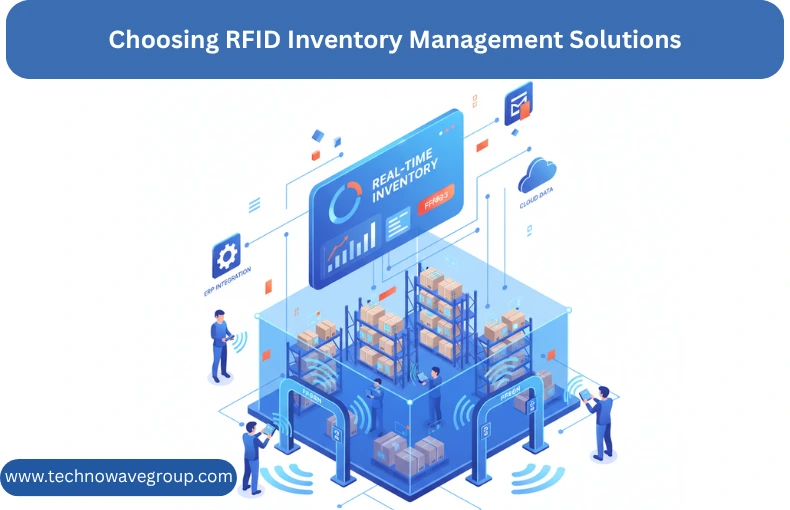
RFID (Radio Frequency Identification) technology uses electromagnetic fields to automatically identify and track tags attached to objects. Modern inventory management solutions leverage this technology to provide real-time visibility into stock movements, locations, and quantities without requiring line-of-sight scanning. The system consists of three main components: RFID tags attached to items, readers that capture tag data, and software that processes and analyzes the information.
Unlike traditional barcode systems, RFID enables simultaneous reading of multiple items, dramatically reducing counting time from hours to minutes. A typical warehouse management system integrated with RFID can process thousands of items per hour with minimal human intervention. This technology has evolved significantly over the past decade, with improved read ranges, smaller tag sizes, and enhanced data storage capabilities making it accessible for businesses of all sizes across retail, healthcare, logistics, and manufacturing sectors.
Key Features to Evaluate in RFID Solutions
Real-Time Inventory Visibility
Real-time tracking capability stands as the cornerstone feature of any robust RFID inventory management solution. This functionality allows businesses to monitor stock levels, locate items instantly, and receive automated alerts when inventory reaches predetermined thresholds. The system should provide dashboard views showing current stock positions across multiple locations, enabling managers to make data-driven decisions quickly.
Advanced solutions offer multi-location tracking, geofencing capabilities, and historical data analysis that reveals inventory movement patterns. For example, retail operations can track merchandise from receiving docks through storage areas to sales floors, identifying bottlenecks in product flow. The ability to generate real-time reports helps prevent stockouts, reduce excess inventory, and optimize reorder points based on actual consumption patterns rather than estimates.
Integration Capabilities
Seamless integration with existing business systems determines how effectively your RFID solution enhances overall operations. The platform should connect effortlessly with Enterprise Resource Planning (ERP) systems, Point of Sale (POS) terminals, and warehouse management software without requiring extensive custom coding. Standard APIs and pre-built connectors for popular business applications reduce implementation time and minimize disruption to daily operations.
Consider solutions that support both cloud-based and on-premise deployments, offering flexibility as your infrastructure evolves. Integration should enable bidirectional data flow, allowing the RFID system to both receive master data from enterprise systems and push real-time inventory updates back. This creates a single source of truth for inventory information across your organization. Compatibility with mobile devices and handheld RFID readers ensures field staff can access critical data anywhere in your facility.
Scalability and Flexibility
Your chosen inventory management solution must grow alongside your business without requiring complete system replacement. Scalability encompasses the ability to add more read points, expand coverage areas, and increase the number of tracked items as operations expand. The software architecture should handle increased data volumes without performance degradation, maintaining quick response times even as your inventory database grows exponentially.
Flexibility in tag types and reader configurations allows adaptation to different inventory categories and storage environments. Some items may require durable metal-mount tags, while others work well with flexible labels. The system should accommodate various RFID frequencies (LF, HF, UHF) depending on specific application requirements. Cloud-based solutions typically offer superior scalability, allowing you to add users, locations, and features through simple subscription adjustments rather than hardware investments.
Assessing Your Business Requirements
Inventory Volume and Complexity
Understanding your inventory characteristics guides technology selection and implementation strategy. Calculate the total number of SKUs you manage, average inventory turnover rates, and the complexity of tracking requirements across different product categories. High-value items may justify more sophisticated tracking with additional security features, while fast-moving consumer goods might prioritize speed and volume processing capabilities.
Consider the physical characteristics of your inventory—size, materials, packaging, and storage conditions—as these factors influence tag selection and reader placement. Metal products and liquids present unique challenges requiring specialized RFID tags designed to perform in difficult environments. Document current inventory management pain points, such as frequent stock discrepancies, shrinkage issues, or time-consuming cycle counts, to ensure your solution directly addresses these specific challenges rather than offering generic capabilities you won’t utilize.
Operational Environment Analysis
Your facility layout and operational workflows significantly impact RFID system design and effectiveness. Map out where inventory moves throughout your operation, identifying key checkpoints where automated scanning provides maximum value. Consider factors like ceiling heights, warehouse aisles, loading docks, and storage rack configurations that affect reader placement and coverage patterns. Environmental conditions including temperature extremes, moisture, and radio frequency interference from other equipment must be evaluated to ensure reliable performance.
Analyze staff workflows to determine where handheld readers, fixed portal readers, or overhead antennas best support daily operations. Distribution centers might benefit from RFID tunnel readers at shipping and receiving points, while retail stores may prioritize loss prevention at exits. Understanding peak activity periods helps size the system appropriately to handle maximum transaction volumes without bottlenecks. Document current manual processes and time spent on inventory-related tasks to establish baseline metrics for measuring post-implementation improvements.
Cost Analysis and ROI Considerations
Initial Investment Components
RFID inventory management solutions require upfront capital across multiple categories beyond just hardware purchases. Tag costs typically represent the largest recurring expense, ranging from a few cents for simple passive tags to several dollars for specialized or reusable tags with advanced features. Reader infrastructure, including fixed portals, handheld devices, and antennas, constitutes the primary hardware investment, with prices varying based on read range, processing power, and environmental protection ratings.
Software licensing fees depend on deployment model (cloud subscription versus perpetual license), number of users, and feature sets required. Implementation services including system design, installation, configuration, and testing add significant costs but ensure proper deployment. Factor in network infrastructure upgrades, such as Wi-Fi enhancements or wired connections, to support RFID readers across your facility. Employee training programs, both initial and ongoing, help maximize system utilization and prevent costly mistakes. A typical mid-sized warehouse implementation might require $50,000-$150,000 in initial investment depending on facility size and inventory complexity.
Calculating Long-Term Benefits
Measuring return on investment requires quantifying both direct cost savings and operational improvements enabled by RFID technology. Labor cost reduction typically provides the most immediate financial impact, as automated scanning eliminates hours of manual counting. Businesses often achieve 30-50% reduction in inventory management labor after full implementation. Improved inventory accuracy reduces capital tied up in safety stock, allowing companies to operate with leaner inventory levels while maintaining service quality.
Shrinkage reduction through better loss prevention and theft detection generates substantial savings, particularly in retail environments where inventory loss averages 1-3% of revenue. Enhanced customer satisfaction from improved stock availability and faster order fulfillment indirectly impacts revenue through higher conversion rates and repeat purchases. Calculate the cost of stockouts in your operation—lost sales, expedited shipping fees, and customer dissatisfaction—to understand prevention value. Most organizations achieve positive ROI within 12-24 months, with ongoing annual benefits significantly exceeding initial investment costs as operational efficiencies compound over time.
Vendor Selection and Partnership
Choosing the right technology provider extends beyond comparing feature lists and pricing. Evaluate vendor experience in your specific industry, as implementations in retail require different expertise than warehouse or healthcare applications. Request case studies demonstrating successful deployments in similar operational environments, focusing on challenges overcome and measurable results achieved. Strong technical support infrastructure, including local service presence and 24/7 helpdesk availability, ensures minimal downtime when issues arise.
Assess the vendor’s commitment to ongoing product development and technology updates to avoid investing in platforms that become obsolete. Partnership approach matters—look for providers who invest time understanding your unique requirements rather than pushing standard packages. Check financial stability and market presence to ensure long-term support availability for your investment. Consider asset management systems integration capabilities if you track fixed assets alongside inventory. Review service level agreements carefully, understanding response times, performance guarantees, and escalation procedures before signing contracts.
Implementation Best Practices
Successful RFID deployment follows a structured approach beginning with pilot programs in limited areas before facility-wide rollout. Start with a high-value or problematic inventory segment where success demonstrates clear benefits and builds organizational support. Establish baseline metrics for accuracy, labor hours, and process times to measure improvement objectively. Engage frontline staff early in the planning process, incorporating their insights about workflow challenges and gathering buy-in for process changes.
Create detailed deployment timelines with realistic milestones, allowing adequate time for testing and refinement before going live. Tag placement testing ensures optimal read rates under actual operating conditions, identifying potential interference or blind spots before mass tagging begins. Develop comprehensive standard operating procedures documenting how staff should use the new system in various scenarios. Phased training programs tailored to different user roles—from warehouse workers to managers—ensure everyone understands their responsibilities. Plan for change management activities addressing concerns and maintaining enthusiasm throughout the transition period.
Measuring Success and Optimization
Post-implementation performance monitoring validates your investment and identifies optimization opportunities. Track key performance indicators including inventory accuracy rates, cycle count time reduction, stockout frequency, and shrinkage levels against pre-implementation baselines. Most organizations see 20-30% reduction in inventory carrying costs within the first year as accuracy improvements enable lower safety stock levels. Monitor system uptime and read accuracy rates to ensure technology performs as specified, addressing any degradation promptly.
Gather user feedback regularly to identify process improvements and additional training needs that maximize system utilization. Analyze data patterns to optimize reader placement, adjust tag positioning, or refine alert thresholds for better operational efficiency. Review integration performance with enterprise systems, ensuring data flows smoothly without delays or errors. Consider expanding successful implementations to additional locations or inventory categories based on proven results. Annual ROI reviews demonstrate value to stakeholders and justify ongoing investment in system enhancements or expansion initiatives.
Conclusion
Selecting the right inventory management solutions requires careful evaluation of your business needs, thorough vendor assessment, and commitment to proper implementation practices. RFID technology offers transformative benefits in accuracy, efficiency, and visibility when deployed thoughtfully with clear objectives and realistic expectations. The journey from selection through implementation to optimization demands patience and persistence, but organizations that invest properly typically achieve substantial returns within two years while positioning themselves for long-term competitive advantage.
Success depends on viewing RFID as a business improvement initiative rather than merely a technology upgrade. By focusing on solving specific operational challenges, engaging stakeholders throughout the process, and continuously optimizing based on performance data, your organization can realize the full potential of modern RFID inventory management solutions. Contact us to discuss how Technowave Group can help you navigate the selection process and implement solutions tailored to your unique requirements.
Frequently Asked Questions
RFID inventory management solutions use radio frequency technology to automatically track and manage inventory in real-time. These systems include RFID tags, readers, and software that provide accurate stock visibility, reduce manual counting, and improve operational efficiency across warehouses and retail locations.
Inventory management solutions automate stock tracking, reducing manual errors by up to 99%. They provide real-time visibility into inventory levels, optimize reorder points, minimize stockouts, and decrease labor costs. Businesses achieve faster cycle counts and better decision-making through accurate, actionable data insights.
Most businesses achieve positive ROI within 12-24 months of implementing RFID inventory management solutions. Organizations typically see 30-50% reduction in labor costs, 20-30% decrease in inventory carrying costs, and significant shrinkage reduction, with annual benefits exceeding initial investment costs over time.
RFID inventory system costs range from $50,000-$150,000 for mid-sized warehouses, depending on facility size and complexity. Expenses include RFID tags, readers, software licenses, installation, training, and ongoing support. Check RFID fixed readers pricing for specific hardware options.
Effective inventory management solutions offer real-time tracking, seamless ERP integration, multi-location visibility, automated alerts, and scalable architecture. They should support various RFID tag types, provide mobile access, generate detailed analytics, and enable customizable reporting for informed decision-making and operational optimization.
Yes, modern RFID inventory management solutions integrate seamlessly with existing ERP, WMS, and POS systems through standard APIs. They enable bidirectional data flow, ensuring real-time synchronization across platforms. Explore retail RFID solutions for comprehensive integration capabilities.
RFID inventory management solutions deliver up to 99% accuracy compared to 63% with manual barcode methods. They enable simultaneous scanning of multiple items without line-of-sight requirements, process thousands of items hourly, and significantly reduce human error in stock counting and tracking operations.
Retail, healthcare, logistics, manufacturing, and warehousing sectors benefit significantly from RFID inventory management solutions. These industries handle high inventory volumes, require real-time tracking, face shrinkage challenges, and need accurate stock visibility. Learn about RFID tracking solutions for various applications.
RFID inventory system implementation typically takes 3-6 months for complete deployment, including planning, pilot testing, and full rollout. Timeline varies based on facility size, inventory complexity, and integration requirements. Starting with pilot programs in limited areas helps validate effectiveness before facility-wide expansion.
Key challenges include initial investment costs, staff training requirements, tag placement optimization, system integration complexity, and change management. Organizations must also address RF interference issues, ensure proper reader coverage, and maintain data accuracy. Using mobile computers simplifies implementation.