Introduction
Every business owns physical assets, from computers and vehicles to machinery and medical equipment. But knowing exactly where those assets are, how they are being used, and when they need maintenance is a different challenge entirely. An asset tracking system solves this problem by giving businesses real-time visibility into their physical resources. Technowave Group, a leading provider of RFID solutions and Auto ID products, helps businesses across the UAE and GCC implement the right tracking technology for their operations. In this blog, you will learn how asset tracking works, what technologies power it, and why businesses across industries are adopting it to cut costs and improve operational efficiency.
Key Takeaways
- An asset tracking system gives businesses real-time visibility into asset location, usage, and condition.
- RFID asset tracking systems deliver faster, more accurate data capture than manual methods.
- Investing in the right asset management software reduces losses, lowers maintenance costs, and improves overall operational efficiency.
What Is an Asset Tracking System?
An asset tracking system is a technology-driven solution that monitors the location, condition, and usage of physical assets, replacing manual logs with accurate, real-time data that teams can act on immediately.
These systems are used across many industries, including retail, warehousing, healthcare, manufacturing, and education. Whether a business needs to track IT equipment across multiple offices or monitor high-value machinery on a factory floor, an asset tracking system provides the visibility needed to operate efficiently and responsibly.
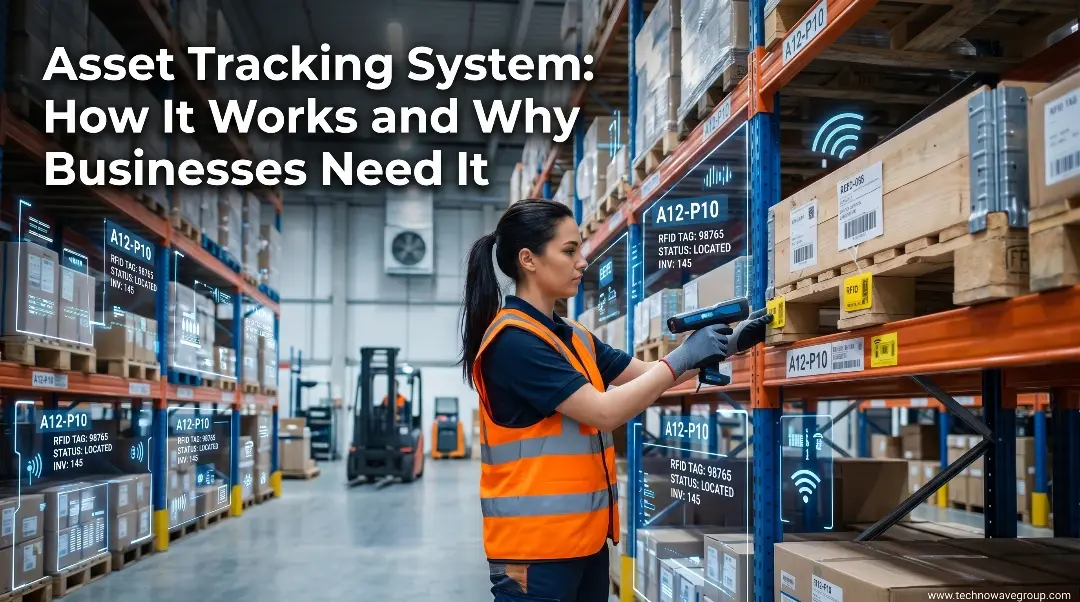
At its core, the system works by attaching identifiers such as RFID tags, barcodes, or QR codes to each asset. These identifiers connect to software that organizes and displays data in dashboards, reports, and automated alerts. Businesses that implement a comprehensive asset management system gain control over their full asset portfolio, from acquisition to disposal, with minimal manual effort.
According to research published by Mordor Intelligence, the global asset tracking market is projected to reach USD 36 billion by 2029, driven by growing demand across sectors such as logistics, healthcare, and manufacturing.
How Does an Asset Tracking System Work?
An asset tracking system follows a clear, three-step process: tag, read, and report, with each step building on the previous one to deliver complete asset visibility across an organization.
Step 1: Tagging the Asset
Each asset receives a physical identifier. Options include barcode labels, QR codes, RFID tags, or GPS devices. The right choice depends on the environment, the required read range, and the level of automation the business needs.
Step 2: Reading the Tag
A reader or scanner captures data from the tag. Barcode scanners require line-of-sight and manual effort, making them suitable for smaller operations. RFID readers, by contrast, can identify hundreds of tagged assets simultaneously without direct contact. This speed makes RFID the technology of choice for high-volume environments.
Step 3: Processing and Reporting
Once captured, tag data flows into asset management system software. This platform stores usage history, tracks movements, triggers maintenance alerts, and generates compliance reports. Managers can access all of this information from a single dashboard, whether they are on the floor or working remotely.
Businesses in the UAE and GCC region looking for a proven RFID asset tracking solution in Dubai can significantly reduce audit time and improve asset accountability with the right implementation partner.
Key Benefits of an Asset Management System for Businesses
An asset management system delivers measurable value across operations, finance, and compliance, helping businesses reduce losses, extend asset lifespans, and meet regulatory requirements with less manual effort.
Reduced Asset Loss and Theft
Unmonitored assets are a direct financial liability. When every item is tagged, tracked, and assigned to a responsible party, it becomes far harder for assets to disappear without notice. Businesses using automated tracking report significant reductions in asset loss, with some organizations recovering up to 20% more usable assets after deployment.
Proactive Maintenance Scheduling
Asset management software schedules preventive maintenance based on actual usage data rather than guesswork. This approach reduces unexpected breakdowns, extends asset lifespans, and avoids costly emergency repairs. A manufacturing plant, for example, can automate service reminders for each piece of equipment based on run hours rather than relying on staff memory.
Faster and More Accurate Audits
Manual audits take days and often produce inaccurate results. An automated asset tracking system can complete the same process in hours with far greater precision. This accuracy is critical for businesses in regulated industries such as healthcare, finance, and government, where asset records must meet strict compliance standards.
Healthcare organizations rely on hospital asset tracking to ensure that critical equipment such as infusion pumps, monitoring devices, and wheelchairs are always available where they are needed most. When assets are misplaced or unaccounted for, patient care is directly affected.
Better Resource Utilization
When leadership can see how often each asset is used, they can redistribute underutilized items instead of purchasing new ones. This directly reduces capital expenditure and improves return on investment across the full asset portfolio.
RFID Asset Tracking System: The Technology Behind the Results
An RFID asset tracking system uses radio waves to identify and monitor assets automatically, eliminating the need for manual scanning and delivering accuracy at a scale that no barcode-based system can match.
RFID stands for Radio Frequency Identification. It uses radio waves to transmit data between tags attached to assets and readers installed throughout a facility or carried by staff. Unlike barcodes, RFID does not require line-of-sight scanning. A single fixed reader can identify dozens of tagged assets passing through a doorway or stored on a shelf in seconds.
There are two primary categories of RFID tags. Passive tags are compact, affordable, and do not require batteries. They are activated by the reader’s signal and are ideal for tracking inventory, equipment, and documents within a defined area. Active tags contain their own power source, broadcast a continuous signal, and are suited for high-value or mobile assets over large distances.
Businesses running a warehouse management system integrated with RFID technology gain the ability to receive and dispatch goods faster, reduce picking errors, and maintain accurate inventory records without manual scanning. For a deeper look at how RFID applies to specific asset categories, RFID for item tracking outlines practical use cases across retail, logistics, and industrial environments.
The GS1 standards body provides globally recognized frameworks for RFID implementation, helping businesses ensure interoperability and scalability as they expand their tracking programs.
How to Choose the Right Asset Management Software
Selecting the right asset management software determines how useful your tracking data becomes, making it critical to evaluate scalability, integration, and regional support before committing to a platform.
Scalability
The platform must grow with your business. A solution managing 500 assets today should accommodate 10,000 assets in three years without requiring a complete overhaul. Look for vendors that offer tiered pricing and modular features.
Integration Capabilities
Strong asset management software connects with existing business systems such as ERP platforms, procurement tools, and maintenance management software. This integration eliminates duplicate data entry and creates a single source of truth for asset information across departments.
User Experience and Reporting
Frontline staff need software they can use without extensive training. Management needs dashboards and reports that surface actionable insights at a glance. Prioritize platforms that balance simplicity with depth.
Cloud vs. On-Premise Deployment
Cloud-based solutions reduce upfront costs and enable remote access from any device. On-premise deployments may better suit organizations with strict data security or compliance requirements. Evaluate both options based on your specific industry and IT infrastructure.
Regional Vendor Support
Local expertise matters, especially for implementation, integration, and ongoing support. Businesses in the UAE and GCC can explore asset management software in Dubai to find solutions backed by regional experience and support teams who understand local operational requirements.
Conclusion
An asset tracking system is one of the most practical investments a business can make. It reduces losses, improves maintenance planning, speeds up audits, and gives leadership the data needed to make informed decisions. Whether you are considering barcode labels for a small office or a full-scale RFID asset tracking system for a multi-site operation, the right solution delivers measurable results from day one. Technowave Group has over 25 years of experience helping businesses across the UAE and GCC design and implement reliable asset management solutions. To understand how to structure your broader asset strategy, read our complete guide to Asset Management System: A Complete Business Guide for a detailed breakdown of planning, implementation, and optimization. Contact Technowave Group today to discuss the right solution for your business.
Frequently Asked Questions
What is an asset tracking system?
An asset tracking system is a technology solution that monitors the location, condition, and usage of physical assets in real time. It uses tags such as RFID or barcodes and software to give businesses accurate, actionable data about every asset they own.
How does RFID work in an asset tracking system?
RFID uses radio waves to transmit data between tags on assets and nearby readers. Fixed RFID readers (https://technowavegroup.com/rfid-fixed-readers/) can automatically detect tagged assets passing through a checkpoint, eliminating manual scanning and enabling businesses to process hundreds of items in seconds.
What is the difference between asset tracking and inventory tracking?
Asset tracking focuses on individual, high-value items monitored throughout their lifecycle, including location, maintenance, and depreciation. Inventory tracking monitors quantities of goods in stock. Both can be managed within an asset management system software platform for a unified view.
Which industries benefit most from an asset tracking system?
Healthcare, logistics, manufacturing, retail, and education benefit most. In healthcare, tracking medical equipment improves patient safety. In logistics, it ensures accurate inventory and faster dispatch. Any industry managing high-value or regulated physical assets gains measurable value from automated tracking.
What types of RFID readers are used in asset tracking?
Businesses use both fixed and portable options. Handheld RFID readers (https://technowavegroup.com/handheld-rfid-readers/) are ideal for mobile audits and stocktaking in large facilities. Fixed readers work well at entry and exit points to automatically log asset movements without any manual effort from staff.
How does an asset management system reduce operational costs?
It reduces costs by preventing asset loss, enabling proactive maintenance, and eliminating unnecessary purchases of underutilized assets. Automated audits also save labor hours. Businesses typically see a clear return on investment within the first year of implementing a structured asset management solution.
Can small businesses benefit from an asset tracking system?
Yes. Cloud-based asset tracking platforms are affordable and scalable, making them accessible for businesses of any size. Small businesses benefit from reduced losses and better equipment maintenance, even with a modest number of assets. Starting with barcode-based tracking is a cost-effective entry point.
What should I look for in asset management system software?
Prioritize scalability, integration with existing platforms, an intuitive interface, and strong vendor support. Cloud deployment offers flexibility and lower upfront costs. Ensure the software supports compliance-ready reporting and the tracking technologies, such as RFID or barcodes, that best suit your operations.
How accurate is RFID compared to manual asset tracking?
RFID asset tracking systems consistently outperform manual methods. Studies show RFID can achieve accuracy rates above 99%, compared to 65% to 75% for manual processes. This improvement directly reduces financial losses tied to misplaced or unrecorded assets across industries.
How long does it take to implement an asset tracking system?
Implementation timelines vary by scale. A small deployment with barcode labels and basic software can be operational within days. A full RFID asset tracking system with fixed readers, custom software, and multi-site integration typically takes four to twelve weeks, depending on complexity and vendor support availability.