

Technowave International delivered an end-to-end RFID retail automation solution for Ozoon’s first store in the UAE, covering RFID label printing and encoding, RFID-enabled checkout, RFID-EAS security, item search, stock count and replenishment support.
Ozoon wanted its first UAE store to operate with a smarter item-level process from the beginning. Instead of treating billing, security, stock count and item search as separate activities, the project was designed around a single RFID identity for every item.
Technowave implemented a retail RFID workflow where product data is used to print and encode RFID labels, the encoded EPC is linked to the SKU, checkout reads multiple items at the POS table, sold items are whitelisted for exit security, and store teams can use handheld RFID devices to count and locate merchandise quickly.
The backend stock data source is only a starting point in the workflow. The main value is created inside the store: faster billing, faster replenishment, faster stock visibility and stronger shrinkage control.
RFID automation was planned as part of store operations, not as a separate back-office activity.
This short video shows the Ozoon RFID retail automation project in a practical store environment. It supports the case study by giving a quick view of how RFID helps connect product identification, store operations and customer-facing retail workflows.
The video is added in a vertical YouTube Shorts format so it fits naturally on mobile and keeps the page aligned with modern social video content.
In apparel and lifestyle retail, the same item may need to be priced, protected, counted, found, billed and verified at the exit. When every function uses a separate barcode scan, manual EAS tag or physical search, store teams lose time in repeated handling.
Traditional hard tags need manual attachment before display and manual removal at checkout. This adds workload for the team and increases billing counter handling time.
Barcode-based counting requires line-of-sight scanning. Staff must handle items one by one, making frequent cycle counts difficult during store hours.
When a customer asks for another size or color, staff may need to check multiple racks or stock areas manually, delaying replenishment and customer service.
The Ozoon solution was designed as a connected RFID retail workflow. Each RFID label carries item identity, and that same identity is used across the store to improve operational speed and control.
Item data is used to print and encode RFID labels through the Zebra ZT411R RFID printer. The label is not only a visual product label; it is also the item’s RFID identity for inventory, checkout and security workflows.
At the POS, a Nordic ID Sampo S1 tabletop reader reads the RFID labels placed on the checkout area. The system converts EPC to SKU and displays the items on the POS screen, improving billing speed and reducing one-by-one scanning dependency.
After billing, the sold item list is sent to the ControlTek overhead RFID-EAS reader. Billed items are whitelisted, while unbilled items can trigger alarms at the exit.
Store staff use the Zebra RFD40 RFID sled paired with the Zebra TC22 mobile computer to count stock, search specific items, locate variants and support replenishment from stockroom to sales floor.
The devices were selected based on the actual workflow: label creation, POS reading, exit detection, fast item search and stock counting.

Used for RFID label printing and encoding. This helped Ozoon prepare smart RFID labels that carry item identity for billing, stock visibility and RFID-EAS workflows.
View product reference →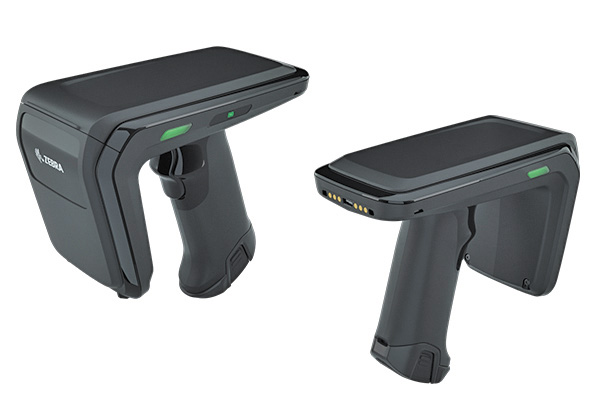
Used by store staff for high-speed RFID stock count and item search, reducing the need to manually scan each product barcode.
View product reference →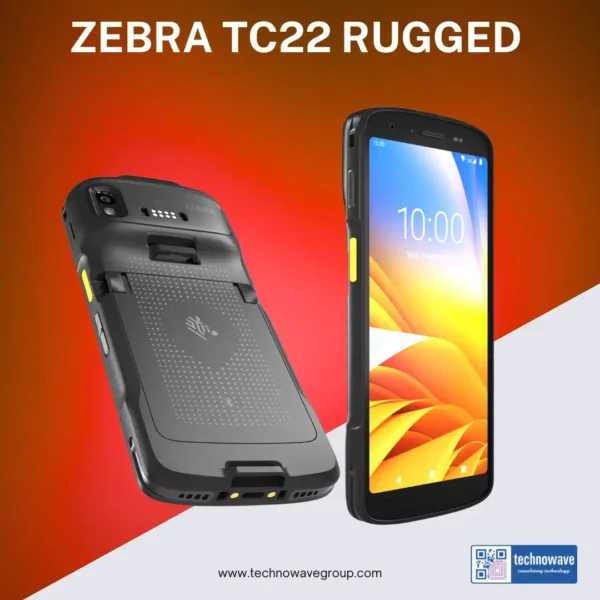
Used as the mobile operating device with the RFD40 for item lookup, task execution, stock visibility and replenishment support on the shop floor.
View product reference →The workflow connects product identity with store operations. The same RFID tag supports multiple business functions instead of requiring separate labels, separate scans and separate security tagging work.
SKU, item and variant data is prepared for RFID label creation.
Zebra ZT411R prints the label and encodes the RFID EPC.
Tabletop RFID reader scans items placed at checkout.
Billed EPC list is sent to the overhead RFID-EAS reader.
Unbilled RFID items can trigger exit-level alerts.
The project was not implemented only as a technology upgrade. It was designed to remove repeated manual work, speed up sales floor operations and improve the accuracy of item-level retail execution.
By using RFID labels as part of the security workflow, the store can reduce dependence on attaching and removing separate EAS hard tags. This saves staff time during receiving, product preparation and checkout.
RFID tabletop reading allows multiple items to be read together at checkout. This reduces one-by-one barcode scanning effort and helps improve queue movement during busy hours.
With Zebra handheld RFID operations, store teams can count items faster without direct line-of-sight barcode scanning. This makes regular stock verification more practical.
When staff need to find a specific size or color variant, RFID item search helps locate it faster, whether it is on the sales floor, in fitting-room returns or in the stockroom.
The ControlTek RFID-EAS workflow receives billed item data and helps trigger alarms for unbilled items, improving protection without relying only on traditional hard tags.
Staff can respond faster to customer requests because item search and stock availability checks are supported by handheld RFID tools instead of manual rack searching.
The Zebra ZT411R was used to create RFID labels that are both printable and electronically encoded. This matters because the tag must carry the correct item identity before it reaches the sales floor.
The Zebra RFD40 and TC22 combination gives staff a mobile RFID workflow for counting, locating and verifying items on the shop floor. This is especially useful for apparel and variant-heavy retail environments.
| Component | Device / Technology | Role in the Project |
|---|---|---|
| RFID Printing & Encoding | Zebra ZT411R RFID Printer | Prints RFID labels and encodes EPC identity for item-level tracking, checkout and RFID-EAS workflows. |
| RFID Checkout | Nordic ID Sampo S1 Tabletop Reader | Reads RFID-tagged items placed on the POS tabletop and supports EPC-to-SKU conversion for billing. |
| RFID-EAS Security | ControlTek Overhead RFID-EAS Reader | Receives billed item whitelist and triggers alarms for unbilled RFID-tagged items at exit. |
| RFID Stock Count | Zebra RFD40 RFID Sled + Zebra TC22 Mobile Computer | Supports faster cycle count, item search, stock verification and replenishment activities. |
“For Ozoon, RFID was not limited to inventory counting. The project connected item preparation, checkout, exit security and sales floor operations into one practical retail workflow.”
RFID can identify items without direct line-of-sight scanning. This helps with faster stock count, multi-item checkout reading and item search.
RFID labels can support security workflows at the exit, reducing reliance on manually attaching and removing separate EAS hard tags for each item.
Staff can search for a specific SKU, size or color using RFID handheld devices, helping them locate missing variants and move items from stockroom to sales floor faster.
The billed item list is sent for whitelisting. This allows the RFID-EAS reader to distinguish sold items from unbilled items at the exit.
Technowave International helps retailers design RFID workflows covering printing and encoding, stock visibility, checkout automation, RFID-EAS security and sales floor item search.
Whether you are opening a new store or upgrading existing operations, Technowave can help you plan a practical RFID deployment around your store layout, product categories and operational priorities.