India’s retail sector is evolving fast. As competition intensifies and customer expectations rise, pricing accuracy and store efficiency have become critical priorities. Electronic shelf label India deployments are gaining momentum — from large-format hypermarkets in Mumbai to pharmacy chains in Bengaluru. These smart digital price tags eliminate paper label chaos, reduce pricing errors, and give retail staff more time to focus on customers. This blog explores what ESL solutions are, how they work, and why Indian retailers cannot afford to ignore them.
Key Takeaways
- Electronic shelf labels replace paper price tags with wireless digital displays that update pricing in real time from a central system.
- ESL solutions India deployments reduce pricing errors by up to 95% and cut label management costs significantly.
- Digital price tags India empower retailers to run instant promotions, comply with pricing regulations, and deliver a consistent customer experience across all store locations.
What Are Electronic Shelf Labels and How Do They Work?
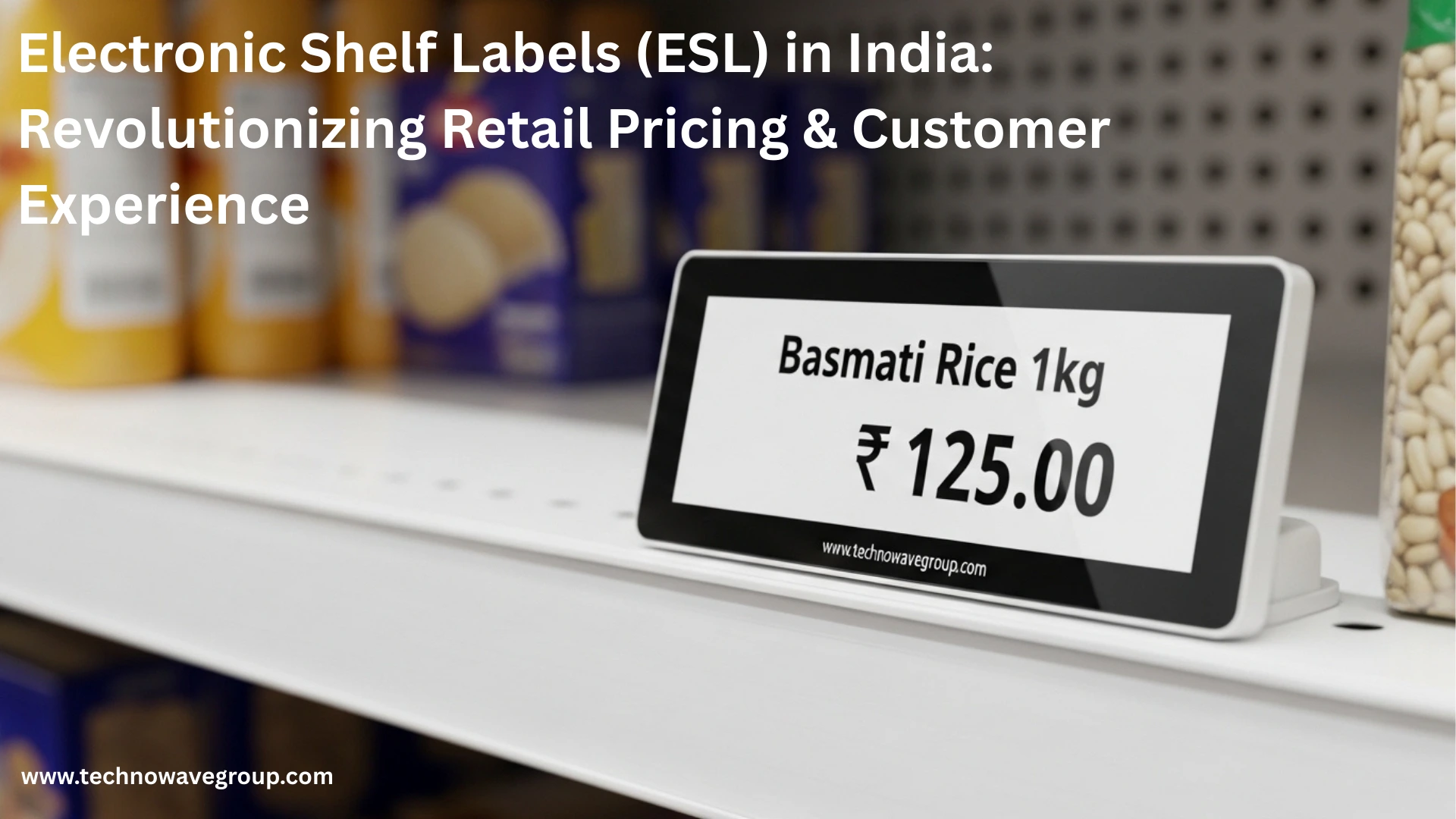
Electronic shelf labels are wireless display units mounted on retail shelves that show real-time product pricing, promotions, and information — all managed from a central software platform.
Electronic shelf labels are small e-ink or LCD screen devices attached to shelf edges. Each label communicates wirelessly with a store server via radio frequency or infrared signals. When a price change is triggered in the ERP or POS system, the update pushes automatically to every relevant label within seconds — no manual reprinting required.
The hardware is energy-efficient. Most ESL units run for 5–10 years on a single battery because e-ink displays only consume power when the screen content changes. For Indian retailers managing thousands of SKUs, this translates into massive savings on paper, ink, printing time, and the labour hours previously spent manually changing shelf tags.
Why Indian Retailers Are Adopting ESL Solutions Now
The Indian retail landscape — driven by quick commerce growth, GST compliance demands, and rising consumer expectations — is creating the perfect environment for ESL adoption.
India’s organized retail market is projected to reach USD 150 billion by 2030, according to industry reports. With this growth comes pressure on operational efficiency. Traditional paper labels create constant friction: prices become outdated during promotions, staff spend hours replacing tags, and human errors lead to billing disputes at the checkout counter.
ESL solutions India solve these problems at scale. A hypermarket running 30,000 product lines can push a flash-sale price change across the entire store in under two minutes. Pharmacy chains can ensure medicine pricing stays compliant with MRP regulations without manual audits. Grocery retailers can adjust fresh-produce prices dynamically based on the time of day or remaining stock — a practice that reduces food waste and improves margins simultaneously.
Retailers in metro cities like Delhi, Hyderabad, and Chennai are already piloting ESL implementations, with strong ROI reported within 12–18 months of deployment.
Key Benefits of Digital Price Tags for Indian Retail Operations
Digital price tags India bring measurable gains across pricing accuracy, staff productivity, customer trust, and sustainability — making them one of the highest-ROI investments in modern retail.
Here is a breakdown of the core advantages Indian retailers are experiencing:
- Pricing accuracy: Pricing errors drop dramatically. Customers see the correct price on the shelf, matching what is charged at the POS — eliminating disputes and building trust.
- Faster promotions: Flash sales and seasonal price changes that once took a full store team several hours to execute manually now happen system-wide in minutes.
- Staff redeployment: Store associates freed from label printing and replacement can focus on replenishment, customer assistance, and value-added tasks.
- Sustainability: A mid-size supermarket can save tens of thousands of paper labels annually — a meaningful reduction in operational waste.
- Multi-location consistency: Retail chains with stores across multiple cities can push uniform pricing changes from headquarters in seconds, ensuring brand and compliance consistency.
- Inventory intelligence: Advanced ESL systems display not just prices but also stock levels, product origin, and nutritional data — enriching the in-store customer experience.
These benefits are equally applicable across retail verticals. Supermarkets, electronics stores, pharmacies, fashion retailers, andESL applications in buffet restaurants and hospitality are all seeing measurable operational improvements.
How ESL Integrates With Your Existing Retail Infrastructure
A major concern for Indian retailers is whether ESL solutions will work with existing ERP, POS, or inventory systems — the answer is yes, with the right implementation partner.
Modern ESL platforms are designed to integrate with widely-used retail management software. Whether a retailer runs SAP, Oracle Retail, Tally, or a custom-built POS system, middleware APIs allow seamless data flow between the pricing engine and the shelf label network. The integration process typically involves three phases:
- System audit: Mapping current ERP and POS data structures to understand how pricing data flows.
- Hardware deployment: Installing ESL base stations (access points) across the store and mounting label units on shelving.
- Software configuration: Connecting the ESL management platform to the retailer’s pricing engine and testing real-time update cycles.
For retailers already investing in RFID retail inventory management in India, ESL integration becomes even more powerful. RFID provides real-time stock visibility at the item level, while ESLs display that data directly on the shelf — creating a truly connected store where pricing, stock, and customer-facing information are always in sync. You can explore how this works end-to-end in our The Complete Guide to Digital Transformation in Indian Retail: RFID, ESL & Smart Analytics.
Choosing the Right ESL Solution for Your Indian Retail Store
Not all ESL systems are equal — Indian retailers need to evaluate communication technology, display type, software capabilities, and vendor support before committing to a deployment.
There are several factors that determine the right ESL configuration for an Indian retail environment:
Communication protocol: RF-based systems (using 2.4 GHz or 868/915 MHz bands) offer greater range and reliability in large-format stores. Infrared systems work well in compact pharmacy or convenience store formats.
Display type: E-ink displays are ideal for standard price and product information. LCD or full-colour ESLs are better suited for promotional displays where visual impact matters.
Battery life and maintenance: In India’s operational environment, where IT staff bandwidth can be limited, choosing ESL units with 5–7 year battery life significantly reduces ongoing maintenance overhead.
Software platform: Look for cloud-based ESL management software that offers role-based access, audit logs, and integration APIs. This ensures pricing compliance and makes multi-store rollouts straightforward.
Vendor support: India’s geographic scale means that post-deployment support matters enormously. Partnering with a vendor that has a proven track record in Indian retail — and who understands local compliance, connectivity conditions, and operational realities — is critical to success.
Working with an experienced retail RFID solution provider ensures that your ESL deployment is backed by the technical expertise and after-sales support needed for a smooth, scalable rollout. According to Grand View Research, the global ESL market is expected to grow at a CAGR of over 16% through 2030 — indicating strong momentum and growing vendor maturity in this space.
ESL ROI: What Indian Retailers Can Realistically Expect
The return on investment for an electronic shelf label India deployment is typically realised within 12–24 months, driven by savings in labour, paper, and error-related costs.
A practical ROI model for a mid-size Indian supermarket (approximately 15,000 SKUs) looks like this:
| Cost Area | Before ESL | After ESL |
| Label printing & consumables | ₹8–12 lakh/year | Near zero |
| Labour hours for label changes | 400–600 hours/year | Under 20 hours/year |
| Pricing error incidents | 200–400/month | Under 10/month |
| Promotional execution time | 4–6 hours per store | Under 10 minutes |
The savings compound rapidly across a retail chain. A 10-store chain that reduces label-change labour by 500 hours per store per year — at an average staff cost — can recover ESL hardware investment well within the first two years. This does not even account for the revenue uplift that comes from faster, more frequent promotional pricing.
Conclusion
The shift to electronic shelf label India solutions is no longer a futuristic concept — it is an operational necessity for retailers who want to compete effectively in India’s rapidly modernising retail environment. From eliminating pricing errors and accelerating promotions to enabling real-time inventory visibility and reducing environmental waste, digital price tags India deliver measurable value across every dimension of store operations.Whether you run a single store or a national retail chain, the right ESL solution — backed by strong integration expertise and reliable after-sales support — will pay for itself and then some. If you are ready to explore what an ESL deployment could look like for your business, contact Technowave Group to speak with a specialist and get a consultation tailored to your store format and operational goals.
Frequently Asked Questions
What is an electronic shelf label (ESL)?
An electronic shelf label is a wireless digital display mounted on a retail shelf edge that shows real-time product pricing, promotions, and information. It updates automatically from a central system, eliminating the need for manual paper label printing or replacement.
How do ESL solutions work in Indian retail stores?
ESL units communicate wirelessly with a store server via radio frequency signals. When a price change is entered into the ERP or POS system, the update pushes automatically to every relevant shelf label within seconds — across the entire store, with zero manual effort required from staff.
What are the main benefits of digital price tags India retailers can expect?
Indian retailers gain pricing accuracy, faster promotional execution, reduced labour costs, and improved customer trust. Digital price tags India deployments also support GST and MRP compliance, reduce paper waste, and allow multi-store chains to push uniform pricing from a central location instantly.
Are ESL solutions suitable for small retail stores in India?
Yes. While large hypermarkets see the most dramatic ROI, compact ESL systems are designed for smaller pharmacy, convenience, and specialty retail formats. Vendors offer scalable packages based on SKU count and store size, making ESL accessible for independent retailers too.
How long do electronic shelf label batteries last?
Most e-ink ESL units last between 5 to 10 years on a single battery charge. Because e-ink displays only consume power when screen content changes, battery drain is minimal — significantly reducing ongoing maintenance effort for Indian store teams. Explore our electronic shelf labels product range for specifications.
Can ESL solutions integrate with existing ERP or POS systems used in India?
Yes. Modern ESL platforms use middleware APIs to connect with widely-used retail systems including SAP, Oracle Retail, Tally, and custom POS solutions. A qualified implementation partner handles the integration, ensuring real-time price synchronisation between your pricing engine and shelf displays.
What is the typical ROI timeline for an ESL deployment in India?
Most Indian retailers recover their ESL investment within 12–24 months. Savings come from reduced label printing costs, fewer labour hours spent on manual tag changes, and a sharp drop in pricing error incidents. Multi-store chains typically see faster payback due to compounded savings. Learn more from our The Complete Guide to Digital Transformation in Indian Retail: RFID, ESL & Smart Analytics.
Which retail verticals in India benefit most from electronic shelf labels?
Supermarkets, hypermarkets, pharmacies, electronics retailers, and fashion stores all see strong results. ESL solutions are also gaining traction in buffet restaurants and hospitality for dynamic menu and pricing displays, making them relevant across food service and retail sectors alike.
How do ESL systems support pricing compliance and MRP regulations in India?
ESL platforms update prices centrally and simultaneously across all shelves and store locations, ensuring that the displayed price always matches the billed price. This eliminates discrepancies that can lead to regulatory penalties, consumer disputes, or compliance failures — a significant advantage for pharmacy and FMCG retailers.
How do I choose the right ESL solution provider in India?
Look for a provider with proven retail deployment experience in India, strong post-sales support, and the ability to integrate with your existing systems. Assess communication protocol options (RF vs. infrared), display types (e-ink vs. LCD), battery life, and cloud software capabilities.