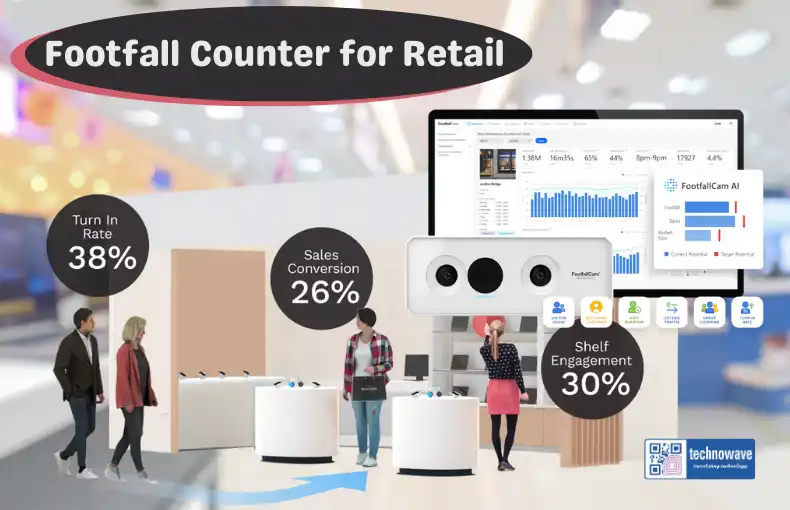
What is a Footfall Counter?
A footfall counter is a smart tool that helps you understand how many people are visiting your store—when they come in, how long they stay, and even how often they return. It’s like having an invisible assistant at the door, silently keeping track of every visitor.
Unlike old-fashioned clickers or basic sensors, modern footfall counters—especially AI-powered systems like FootfallCam—offer far more than simple headcounts. In fact, they provide real-time insights into customer behavior and store traffic patterns. Furthermore, these advanced systems help you measure the effectiveness of your marketing campaigns and window displays.
For any retail manager or marketing team, this kind of data is gold. It lets you make smarter decisions about staffing, store layout, promotions, and overall performance—based on facts, not guesswork.
Why is a Footfall Counter Essential for Retail Stores?
Running a successful retail store today isn’t just about great products and friendly staff—it’s about making smart, data-backed decisions every day. That’s where a footfall counter comes in.
This simple yet powerful tool gives you real answers to important questions like:
- How many people visited my store today?
- When are my busiest hours?
- Are my marketing efforts bringing in more foot traffic?
- How many visitors actually turn into paying customers?
Without a footfall counter, you’re mostly guessing.
Here’s what it helps you do:
- Understand customer flow: Know exactly when customers come in and how they move through the store.
- Measure marketing impact: See whether your promotions or window displays are driving more visits.
- Plan smarter staffing: Align staff schedules with peak hours to improve customer service and reduce idle time.
- Boost sales conversion: Compare the number of visitors to actual purchases to spot missed opportunities.
In summary, a footfall counter for retail enables you to move beyond guesswork and start making decisions grounded in real, reliable data. Ultimately, it’s a crucial step toward running a more efficient and profitable store.
.
What Are the Challenges Retailers Face Without a Footfall Counter?
Running a retail store without a footfall counter is like flying blind—you’re relying on assumptions rather than solid facts. Although sales figures reveal part of the picture, they don’t tell you how many people entered your store, how many left without making a purchase, or how effective your marketing efforts truly are.
Here are some real challenges retailers face without a reliable footfall counter for retail:
1. Blind Decision-Making
Without knowing how many people enter your store and when, it becomes nearly impossible to make informed decisions.
- You don’t know your actual busiest hours.
- You can’t tell whether a sales dip is due to fewer visitors or lower conversion.
- You may be guessing when to launch campaigns or stock certain items.
Result: You waste time, effort, and money on decisions that might not align with actual customer behavior.
2. Poor Conversion Tracking
You might know how many sales you made, but without footfall data, you don’t know your conversion rate—the percentage of visitors who actually buy something.
For example:
- If 200 people visit and 40 buy, your conversion is 20%.
- Without knowing the 200 visits, you’d only see the 40 sales—missing key performance insights.
Result: You can’t identify if a low sales day was due to fewer customers or poor in-store engagement.
3. Staff Misallocation
Most stores schedule staff based on gut feeling or old habits. But if you don’t have accurate visitor traffic data:
- You might have too few staff during peak times, leading to long queues and poor customer service.
- Or too many during slow hours, wasting labor costs.
Result: You risk both unhappy customers and overspending on staffing.
4. Inaccurate Performance Reporting
For retail chains or multi-branch businesses, comparing store performance becomes unreliable without visitor data.
- Store A may have higher sales than Store B—but if Store B had double the foot traffic, it’s actually underperforming.
- You can’t track trends or spot issues like low engagement, poor display effectiveness, or unproductive floor staff.
Result: You miss opportunities to improve struggling stores or recognize high-performing teams.
Benefits of AI FootfallCam Camera for Retail Stores
Today’s retail environment demands more than just knowing how many people walk through your doors. You need smart data that helps you improve operations, optimize staff, and boost sales. That’s exactly what FootfallCam—an AI-powered footfall counter for retail—delivers.
Here are the key benefits it brings to your store:
1. Highly Accurate People Counting (98%+ Accuracy)
FootfallCam uses advanced AI and 3D sensors to differentiate between:
- Adults and children
- Staff and customers
- Individuals vs. groups
This means you get clean, accurate data—free from common errors like counting staff movements or double entries. You’ll always know the true number of shoppers in your store.
2. Customer Heatmaps and Path Tracking
Want to know which areas of your store get the most attention?
FootfallCam creates visual heatmaps showing where customers walk, stop, and spend time. This helps you:
- Optimize store layout and product placement
- Identify underperforming zones
- Place promotional items in high-traffic areas
It’s like watching your store through the eyes of your customers.
3. Live Dashboard for Real-Time Decisions
FootfallCam gives you access to a real-time online dashboard showing:
- Current footfall numbers
- Hourly trends
- Entry/exit patterns across multiple entrances
Store managers can use this data to make quick decisions—such as opening more counters or adjusting staff positions based on live visitor flow.
4. Track Marketing Campaign Impact
How do you know if your promotions are working?
With FootfallCam, you can compare:
- Before and after campaign traffic
- Day-to-day changes in footfall
- Store entries linked to specific offers or events
This helps you measure ROI on marketing efforts and fine-tune campaigns for better performance.
5. Efficient Queue and Dwell Time Management
Long queues and idle customers can hurt your sales and brand image.
FootfallCam tracks how long shoppers wait at checkout and how much time they spend in-store, helping you:
- Avoid long lines with better queue management
- Spot customer fatigue or lost interest
- Improve service speed and staff allocation
6. Compare Multiple Store Locations Easily
For brands with several outlets, consistency is key.
FootfallCam allows centralized reporting, so you can:
- Compare footfall and performance across branches
- Set benchmarks and KPIs
- Identify which stores are thriving and which need support
This creates a culture of data-driven accountability across your retail network.
Stores With vs Without a Footfall Counter: What’s the Difference?
Investing in a footfall counter for retail can transform how your store operates. It’s not just about counting people—it’s about unlocking insights that drive real business results.
Here’s a side-by-side comparison to help you see the clear difference:
| Feature | With Footfall Counter | Without Footfall Counter |
| Customer Traffic Data | Accurate, real-time data showing how many people enter and exit the store. Helps track daily trends and peak hours. | Relying on gut feeling or manual clickers. No consistent data to guide decisions. |
| Conversion Rate Insights | Know exactly how many people bought vs. how many visited. Lets you optimize engagement and sales strategies. | You may know the number of sales, but not how many people walked away without buying. |
| Layout Optimization | Heatmaps show where shoppers spend time, helping redesign product placements for maximum impact. | Decisions based on observation or guesswork. High-traffic areas often go unnoticed. |
| Staffing Decisions | Schedules are aligned with real-time visitor trends—ensuring enough hands during busy hours and saving costs during slow periods. | Staffing levels remain fixed, which can lead to overstaffing or underperformance during peak times. |
| Campaign ROI Measurement | Easily track footfall before, during, and after a marketing campaign to measure success and improve future efforts. | No way to tell if a campaign actually brought people into the store. Only sales data is available. |
| Store Performance Benchmarking | Compare multiple locations using unified data on footfall, conversion, and dwell time. Useful for setting KPIs and rewarding top performers. | Inconsistent metrics across branches. Hard to compare performance fairly or identify underperforming stores. |
| Queue & Wait Time Monitoring | Identify long checkout lines and optimize cashier allocation to improve customer satisfaction. | Queues form without warning. Staff can’t respond quickly, leading to frustrated shoppers. |
| Customer Behavior Insights | Track dwell time, zone activity, and repeat visits to better understand customer interests and loyalty. | No data on how shoppers behave inside the store, making customer engagement planning difficult. |
| Business Forecasting | Use historical footfall trends to predict sales, plan inventory, and prepare for seasonal demand. | Inventory and sales forecasts are based on sales alone—not traffic, leading to over or under-stocking. |
| Data-Driven Culture | Empowers teams with facts and visual reports to improve store operations and customer service. | Decisions are based on opinions, assumptions, or outdated reports. Teams lack clear performance indicators. |
Analytics & Reports: How a Footfall Counter Empowers Store Managers
One of the most powerful features of a modern footfall counter for retail—especially AI-driven systems like FootfallCam—is the reporting dashboard. It’s not just about knowing how many people walked in; it’s about turning that data into decisions.
Here’s how it empowers store managers every day:
Hourly and Daily Visitor Trends
Want to know your busiest times of day or week?
The dashboard gives you a clear view of:
- When most people visit your store
- Seasonal patterns and footfall spikes
- Trends over weeks, months, or even years
How it helps:
With these insights, you can align staff shifts more effectively, restock shelves at optimal times, and plan in-store promotions to coincide with peak traffic periods.
Turn-in Rate (Passersby to Entry Rate)
Noticing a lot of window shoppers? This metric shows how many passersby actually enter the store.
How it helps:
- Gauge how effective your window displays or signage are
- Test new visuals and immediately see their impact
- Know when exterior marketing needs a refresh
Demographics Estimation (Age & Gender)
With advanced AI, FootfallCam can estimate the age group and gender of your visitors (without collecting any personal data).
How it helps:
- Tailor promotions and product placement
- Adjust music, lighting, or displays based on visitor profiles
- Align marketing campaigns with the right audience
Visit Frequency & Loyalty Metrics
The system can recognize returning visitors and track how often they come back.
How it helps:
- Identify loyal shoppers and reward them
- Spot changes in customer retention trends
- Measure the long-term impact of loyalty programs or service changes
Zone Analytics (In-Store Heatmaps)
See where shoppers go, how long they stay in each section, and which areas get ignored.
How it helps:
- Improve product placement and signage
- Detect “cold zones” that may need attention
- Optimize store layout to boost browsing and sales
Making Smarter, Data-Backed Decisions
All of this data is visualized in user-friendly reports and dashboards, accessible to both store managers and head office. The result?
- Better daily decision-making
- Stronger campaign planning
- Measurable improvements in conversion, service, and profitability
With FootfallCam, your store stops operating on guesswork and starts running on insights.
How Retailers Are Using Footfall Counter Systems Today
Across Dubai, Abu Dhabi, and the wider UAE, forward-thinking retailers are turning to AI-powered footfall counters like FootfallCam to gain a competitive edge. Whether it’s a high-end boutique or a busy supermarket, footfall data is helping businesses work smarter, not harder.
Here’s how different types of retailers are using these systems to enhance operations and customer experience:
Luxury Brands
Luxury retailers often rely on personalized service and deep customer engagement. With FootfallCam:
- They track VIP customer visit frequency and behavior patterns
- Monitor dwell time to understand interest zones (e.g., watches vs. handbags)
- Use footfall data to schedule high-touch staff during peak browsing times
Result: A more curated, exclusive shopping experience that builds loyalty and increases high-value purchases.
Supermarkets & Hypermarkets
In high-traffic environments like grocery stores, efficiency is key. Supermarkets use footfall data to:
- Adjust staffing dynamically across departments
- Optimize checkout lanes to reduce wait times
- Plan promotions based on peak visitor hours
Result: Faster service, reduced labor waste, and a better in-store experience for shoppers.
Shopping Malls
Large malls benefit from aggregated data across multiple entrances and floors. With FootfallCam, mall managers can:
- Monitor total visitor footfall by zone or floor
- Track which entrances draw the most traffic
- Use data to justify rental pricing or redesign tenant layouts
Result: Better lease management, improved tenant satisfaction, and enhanced visitor flow.
Quick Service Restaurants (QSR Chains)
Fast food outlets and café chains use footfall counters to:
- Compare visitor traffic vs. actual sales
- Monitor peak dining times (lunch vs. dinner)
- Evaluate the impact of seasonal menus or promotions
Result: More efficient operations and insights that help grow store performance chain-wide.
Electronics & Gadget Retailers
In tech stores, customers usually browse for a while before making a purchase decision. By leveraging footfall data, retailers unlock several valuable insights. For example, they can pinpoint which zones attract the most visitors—such as mobile devices versus home appliances. Additionally, monitoring dwell time helps gauge interest in specific products. On top of that, retailers can assess how effective their marketing campaigns are, particularly during new product launches.
Final Thoughts
A footfall counter for retail is no longer a luxury—it’s a necessity for modern retail success. It does far more than just count visitors. From analyzing customer behavior and measuring marketing ROI to optimizing store layouts and staff planning, a smart, AI-powered solution like FootfallCam empowers you with the insights you need to grow.
Whether you’re running a single boutique or managing a chain of stores, footfall data gives you the power to stop guessing and start making data-backed decisions that improve performance, customer experience, and profitability.
Ready to Upgrade Your Retail Insights?
Partner with Technowave International—the official FootfallCam partner in the UAE and GCC—and take your retail analytics to the next level.