Introduction
Smart manufacturing is transforming how production facilities operate, and RFID for smart manufacturing stands at the forefront of this revolution. As factories evolve into intelligent, data-driven environments, the need for real-time visibility into production processes has never been more critical. The global RFID market, valued at approximately $15.5 billion in 2024, is projected to reach around $37.7 billion by 2032, reflecting the technology’s central role in Industry 4.0. RFID technology enables manufacturers to track materials, monitor work-in-progress items, and optimize production workflows with unprecedented accuracy. This comprehensive guide explores how RFID solutions are revolutionizing manufacturing operations, from the factory floor to the supply chain.
Key Takeaways
- RFID technology provides real-time visibility into production processes, enabling manufacturers to track work-in-progress items throughout every stage of manufacturing
- Smart manufacturing environments leverage RFID to reduce bottlenecks, improve quality control, and optimize resource allocation
- Integration with AI, IoT, and ERP systems transforms RFID data into actionable insights for predictive maintenance and production planning
- Manufacturers implementing RFID for manufacturing industry operations report significant improvements in efficiency, reduced costs, and enhanced traceability
Understanding RFID Technology in Manufacturing Environments
Radio Frequency Identification (RFID) utilizes electromagnetic fields to automatically identify and track tags attached to objects throughout the production process. Unlike traditional barcode systems that require line-of-sight scanning, RFID doesn’t require line-of-sight scanning and can read multiple tags simultaneously, making it ideal for dynamic manufacturing environments.
Modern RFID solutions consist of three core components: RFID tags attached to items, readers that detect these tags wirelessly, and software that processes the collected data. Embedded RFID tags automatically identify materials, WIP, and assets, capturing real-time data that seamlessly integrates with manufacturing execution systems (MES) and ERP systems to automate workflows. This integration creates a comprehensive tracking ecosystem that provides manufacturers with complete visibility into their operations.
The technology has evolved significantly, with advancements addressing historical limitations. New RFID-on-metal antenna designs now intelligently harness signal reflections, improving performance even in challenging environments, making the technology particularly valuable for automotive and chemical manufacturing where metal components and liquids are prevalent.
Real-Time Work-in-Progress Tracking: The Game Changer
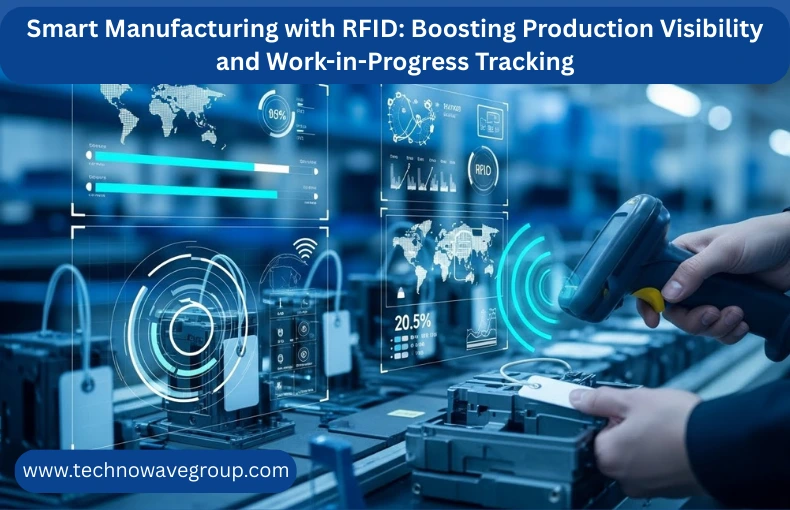
Work-in-progress tracking represents one of the most valuable applications of RFID for manufacturing industry operations. By attaching RFID tags to components, batches, or containers, manufacturers gain continuous monitoring capabilities as items move through different production stages.
With RFID, manufacturers can have real-time data on the location and status of WIP items, enabling them to make timely, data-driven decisions about production scheduling and resource allocation. This visibility extends beyond simple location tracking to include detailed information about processing times, quality checkpoints, and production bottlenecks.
Key Benefits of RFID-enabled WIP Tracking:
- Immediate Status Updates: Production managers receive instant notifications when items enter or exit specific workstations, enabling proactive decision-making
- Bottleneck Identification: Real-time data reveals where production slowdowns occur, allowing for swift corrective action
- Enhanced Scheduling: Accurate WIP data enables better production planning and resource allocation
- Reduced Search Time: RFID-enabled systems help optimize inventory levels, reduce material waste, and identify potential supply chain issues before they impact production
Manufacturing giants like Airbus and Ford have successfully implemented RFID for WIP management. Airbus uses RFID to track thousands of aircraft components during the assembly process, enabling the company to significantly reduce assembly errors, improve production efficiency, and minimize the risk of costly reworks.
Enhancing Production Visibility Across the Factory Floor
Production visibility extends beyond tracking individual items to encompassing the entire manufacturing ecosystem. RFID technology creates a digital twin of physical operations, providing manufacturers with comprehensive insights into their production environment.
RFID provides the high-quality, actionable data that advanced technologies like AI and IoT require to deliver their full potential, acting as the data-capture layer that feeds more intelligent systems. This integration enables several critical capabilities:
Real-Time Asset Management
RFID tracking solutions monitor not just products but also tools, equipment, and machinery. Manufacturing facilities can track tool inventory, monitor equipment usage patterns, and optimize asset utilization. This visibility prevents tool losses, reduces equipment downtime, and ensures that critical resources are available when needed.
Quality Control Integration
RFID technology enhances quality assurance by creating an automated verification system. By integrating RFID readers at key quality control points, manufacturers can automatically record and verify that each product has passed through the necessary inspection stages, ensuring that no steps are missed in the quality assurance process.
Material Flow Optimization
RFID enables manufacturers to monitor the movement of raw materials, components, and work-in-progress items as they flow between workstations. This visibility helps identify inefficiencies, reduce material handling costs, and maintain optimal inventory levels throughout the production process.
Integration with Industry 4.0 Technologies
The true power of RFID for smart manufacturing emerges through integration with complementary Industry 4.0 technologies. Manufacturing environments that employ RFID sensors to track products and assets in real time significantly improve inventory accuracy and reduce stockouts.
AI and Predictive Analytics
When RFID data combines with artificial intelligence, manufacturers gain predictive capabilities. AI algorithms can leverage RFID data to predict equipment maintenance needs, optimize production schedules, and identify potential bottlenecks before they occur. This predictive approach transforms reactive maintenance into proactive management.
IoT Connectivity
RFID is now being integrated with Internet of Things (IoT) devices and artificial intelligence, creating smarter ecosystems where RFID readers communicate with sensors and AI algorithms to predict stock shortages or maintenance needs without any human intervention. Smart warehouses exemplify this integration, where multiple technologies work in concert to optimize operations.
ERP and MES Integration
Modern warehouse management systems seamlessly integrate with RFID technology. This integration ensures that digital records accurately reflect physical inventory, eliminating discrepancies and enabling better planning across the entire organization.
Implementing RFID in Manufacturing: Best Practices
Successful RFID implementation requires careful planning and execution. Manufacturers should consider several factors when deploying RFID for manufacturing industry applications:
1. Assessment and Planning
Begin by evaluating current tracking processes and identifying specific pain points. Determine which areas will benefit most from RFID implementation, whether it’s WIP tracking, asset management, or quality control. Consider running pilot programs to validate the technology’s effectiveness in your specific environment.
2. Tag Selection
Different frequencies determine the reading distance, penetration, and application environment: UHF (Ultra High Frequency) can realize long-distance reading, suitable for warehousing and production line tracking in electronic manufacturing. Choose tags that can withstand your manufacturing environment’s conditions, including temperature, humidity, and potential exposure to chemicals or metals.
3. Infrastructure Deployment
Strategic placement of RFID readers ensures comprehensive coverage without creating data redundancy. Fixed readers at checkpoints, portable handheld devices for flexibility, and portal systems for automated tracking create a robust infrastructure.
4. System Integration
Ensure your RFID solution integrates seamlessly with existing ERP, MES, and quality management systems. This integration maximizes ROI by leveraging existing investments while enhancing capabilities.
5. Data Security
As RFID tags start carrying more sensitive data, the latest generation of RFID solutions includes encryption and authentication features right at the tag level, making it much harder for hackers to clone or misuse stored information.
Measuring ROI: The Business Case for RFID
Manufacturers implementing RFID solutions typically realize returns through multiple channels:
Operational Efficiency Gains
- Reduced Labor Costs: Automation of inventory counts and tracking reduces manual data entry requirements
- Minimized Material Waste: Accurate tracking prevents materials from getting lost or misplaced
- Improved Asset Utilization: Better visibility into equipment usage optimizes resource allocation
- Faster Production Cycles: Elimination of bottlenecks and reduced search times accelerate throughput
Quality and Compliance Benefits
RFID allows for precise tracking of each item’s history, including when, where, and how it was processed, enhancing traceability and quality control. This comprehensive documentation supports regulatory compliance and enables rapid response to quality issues.
Strategic Advantages
The increasing emphasis on operational efficiency, cost reduction, and sustainable manufacturing practices continues to drive RFID adoption. Manufacturers gain competitive advantages through improved on-time delivery, enhanced customer satisfaction, and greater operational agility.
Future Trends in RFID Manufacturing
The evolution of RFID technology continues to accelerate, with several trends shaping its future in manufacturing:
As these technologies continue to mature and become more affordable, we can expect to see a surge in adoption, with a particular focus on industries such as automotive, pharmaceuticals, and electronics. Emerging capabilities include RFID tags with integrated sensors that monitor temperature, humidity, and other environmental factors, providing even more comprehensive data for decision-making.
The shift toward sustainable manufacturing also influences RFID development. More companies are demanding eco-friendly RFID tags made from recyclable materials and developed using low-impact manufacturing processes, aligning technology adoption with environmental goals.
Cloud-based RFID platforms are becoming standard, allowing manufacturers to manage data from multiple locations and enhancing scalability across global operations. This evolution supports the growing trend toward distributed manufacturing and complex supply chains.
Conclusion
RFID for smart manufacturing represents a transformative technology that addresses fundamental challenges in production visibility and work-in-progress tracking. By providing real-time data, enabling predictive analytics, and integrating seamlessly with Industry 4.0 technologies, RFID solutions empower manufacturers to operate with unprecedented efficiency and agility.
The technology’s evolution continues to expand its capabilities, from improved performance in challenging environments to enhanced data security and sustainability features. For manufacturers seeking to remain competitive in an increasingly digital landscape, implementing RFID solutions is no longer optional—it’s essential for success.
As the manufacturing industry continues its digital transformation journey, RFID technology will remain a cornerstone of smart factory operations. Organizations that embrace these solutions today position themselves to lead tomorrow’s competitive marketplace, benefiting from enhanced visibility, improved efficiency, and the agility needed to adapt to changing market demands.
Ready to transform your manufacturing operations with RFID technology? Contact us to discover how Technowave Group can help you implement cutting-edge RFID solutions tailored to your specific manufacturing needs.
Frequently Asked Questions
What is RFID for smart manufacturing?
RFID for smart manufacturing uses radio frequency identification technology to automatically track materials, work-in-progress items, and assets throughout production processes. It provides real-time visibility, enabling data-driven decisions, optimized workflows, and seamless integration with Industry 4.0 systems for enhanced operational efficiency.
How does RFID improve work-in-progress tracking in manufacturing?
RFID enables continuous monitoring of WIP items through production stages using wireless tags and readers. It provides instant status updates, identifies bottlenecks, reduces search time, and creates automated digital chains of custody, significantly improving production scheduling and resource allocation accuracy.
What are the main benefits of RFID for manufacturing industry operations?
RFID technology reduces labor costs through automation, minimizes material waste, improves asset utilization, and enhances quality control. It provides real-time inventory visibility, streamlines production processes, ensures regulatory compliance, and enables predictive maintenance, ultimately boosting overall manufacturing efficiency and profitability.
Can RFID technology integrate with existing manufacturing systems?
Yes, modern RFID solutions seamlessly integrate with ERP, MES, and warehouse management systems. This integration synchronizes physical and digital inventory data, automates workflows, and provides unified dashboards for production managers, ensuring smooth operations without replacing existing infrastructure investments.
What types of RFID tags are best for manufacturing environments?
UHF (Ultra High Frequency) RFID tags are ideal for manufacturing, enabling long-distance batch reading and high-speed identification. Rugged on-metal tags withstand harsh conditions including high temperatures, humidity, and chemical exposure, making them perfect for automotive, electronics, and industrial manufacturing applications.
How does RFID enhance production visibility on the factory floor?
RFID creates real-time digital twins of physical operations by tracking products, tools, and equipment throughout facilities. It monitors material flow between workstations, verifies quality checkpoints automatically, and provides comprehensive insights that help manufacturers identify inefficiencies and optimize production schedules effectively.
What is the ROI timeline for implementing RFID in manufacturing?
Manufacturing facilities typically see ROI within 12-24 months through reduced labor costs, minimized waste, improved inventory accuracy, and faster production cycles. Benefits include decreased equipment downtime, enhanced quality control, better regulatory compliance, and significant operational efficiency gains throughout the organization.
How does RFID support Industry 4.0 and smart factory initiatives?
RFID serves as the data foundation for Industry 4.0 by capturing real-time information that feeds AI algorithms and IoT platforms. It enables predictive analytics, automated maintenance scheduling, intelligent production planning, and creates connected manufacturing environments that adapt dynamically to changing demands.
What challenges should manufacturers consider when implementing RFID?
Key considerations include tag selection for specific environments, strategic reader placement, system integration complexity, initial infrastructure costs, and data security. Manufacturers should conduct pilot programs, evaluate environmental factors like metal interference, and ensure compatibility with existing systems before full-scale deployment.
Is RFID technology suitable for small and medium-sized manufacturers?
Absolutely. RFID solutions are increasingly affordable and scalable, making them accessible for manufacturers of all sizes. SMEs benefit from improved inventory accuracy, reduced operational costs, enhanced traceability, and competitive advantages. Cloud-based platforms and flexible deployment options minimize upfront investments while maximizing returns.