
Introduction
Retail theft costs Indian businesses over ₹40,000 crores annually, creating an urgent need for advanced security solutions. RFID retail security system insights for India reveal how Radio Frequency Identification technology is revolutionizing loss prevention strategies across the country. From Mumbai’s fashion districts to Delhi’s electronics markets, retailers are discovering that RFID solutions offer more than just anti-theft protection—they provide real-time visibility, operational efficiency, and enhanced customer experiences. This comprehensive guide explores how Indian retailers can leverage RFID technology to protect assets, reduce shrinkage, and build more secure retail environments.
Key Takeaways
- RFID retail security system insights for India show retailers achieving 40-50% reduction in theft-related losses with comprehensive implementation
- RFID technology provides multi-layered security combining Electronic Article Surveillance (EAS), real-time tracking, and data analytics
- RFID solutions integrate seamlessly with existing retail infrastructure, offering ROI within 12-18 months
- Indian retailers report improved inventory accuracy (98%+) alongside enhanced security, creating dual benefits for loss prevention
Understanding RFID Security Technology
RFID technology has transformed from a simple tracking tool into a comprehensive security platform for Indian retail. Unlike traditional security systems that only detect theft at exit points, RFID creates multiple security layers throughout the retail environment. Each product receives a unique digital identity through RFID tags, enabling continuous monitoring from warehouse to store floor to checkout.
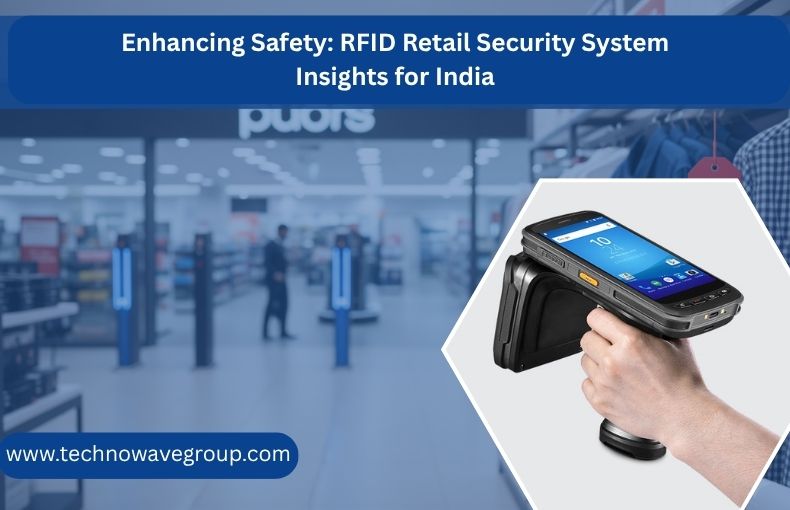
The system operates through three core components working in harmony. RFID tags attached to merchandise contain electronic product codes storing product information. Fixed and handheld readers strategically placed throughout stores capture tag data, while sophisticated software analyzes this information to detect anomalies and trigger security responses. This integrated approach provides Indian retailers with unprecedented visibility into product movements.
The Indian Retail Security Challenge
Rising Theft and Shrinkage Rates
Indian retailers face escalating security challenges as the market expands. Organized retail crime has become increasingly sophisticated, with professional shoplifters using technology to defeat traditional security measures. Internal theft by employees compounds the problem, accounting for nearly 45% of retail losses in India.
Traditional security approaches struggle against these evolving threats. Camera systems require constant monitoring and offer limited real-time response capabilities. Security personnel cannot observe every customer simultaneously, creating opportunities for theft. Manual inventory counts fail to detect losses quickly enough for effective intervention. These limitations have driven Indian retailers to seek more advanced solutions.
Key Security Challenges:
- Shoplifting accounts for 35% of retail losses
- Employee theft contributes 45% to shrinkage
- Vendor fraud and administrative errors cause 20% of losses
- Average shrinkage rate in Indian retail: 2-3% of revenue
- Peak theft periods during festivals and sale seasons
Regional Variations in Security Needs
Security requirements vary significantly across India’s diverse retail landscape. Metro cities like Mumbai, Delhi, and Bangalore face high-volume theft due to dense populations and organized crime networks. Tier-2 cities experience different challenges, with limited security infrastructure and trained personnel. Understanding these regional variations helps retailers implement appropriate RFID security strategies.
How RFID Enhances Retail Security
Electronic Article Surveillance Integration
RFID-enabled EAS systems represent the first line of defense against retail theft. Modern EAS pedestal systems integrate RFID readers that detect active tags when merchandise passes through exit points. Unlike older magnetic or RF systems, RFID EAS provides specific product information when alarms trigger, helping staff respond more effectively.
The technology works by maintaining tag status throughout the purchase journey. Active tags on unpaid merchandise trigger alarms when customers approach exits. During legitimate purchases, checkout systems deactivate tags automatically. This seamless process reduces false alarms while maintaining security effectiveness. Indian retailers report 65-70% reduction in shoplifting after implementing RFID EAS systems.
Real-Time Inventory Visibility
Security extends beyond preventing physical theft to detecting all forms of inventory loss. RFID solutions provide real-time visibility into inventory locations and movements, enabling immediate detection of discrepancies. When products move unexpectedly or disappear from expected locations, the system alerts security personnel instantly.
This visibility proves particularly valuable for high-value merchandise. Electronics retailers use RFID detection systems to monitor expensive items continuously. Jewelry stores track every piece through customer interactions. The ability to know exactly where products are at all times dramatically reduces both external and internal theft opportunities.
Data Analytics for Loss Prevention
Advanced RFID security systems analyze patterns to identify potential theft activities before losses occur. Machine learning algorithms process movement data to recognize suspicious behaviors. Systems can detect when products frequently move toward exits without purchases or when specific items disappear during certain shifts, indicating potential employee theft.
Analytics also reveal systemic security weaknesses. Heat maps show store areas with highest loss rates, guiding security resource allocation. Time-based analysis identifies vulnerable periods requiring additional vigilance. This intelligence transforms security from reactive to proactive, preventing losses rather than simply detecting them after occurrence.
Implementation Strategies for Indian Retailers
Choosing Appropriate RFID Security Systems
Selecting the right RFID security system requires understanding business-specific needs. Small retailers might prioritize basic EAS functionality with handheld readers for inventory checks. Large chains need comprehensive systems integrating fixed readers, tunnel readers, and centralized monitoring. Retail RFID solutions should match store layout, product types, and security risk profiles.
Tag selection significantly impacts system effectiveness. Hard tags attached with pins work well for apparel and accessories, providing visible deterrence while enabling reuse. Soft labels suit products with flat surfaces like books and packaged goods. Specialized tags address challenging materials like metals and liquids that interfere with RFID signals.
Integration with Existing Infrastructure
Successful RFID security implementation requires seamless integration with current retail systems. Modern solutions connect with existing point-of-sale platforms, ensuring automatic tag deactivation during legitimate purchases. Integration with video surveillance systems provides visual verification when RFID alarms trigger, helping distinguish genuine theft from system errors.
Tracking solutions and RFID automation extend security beyond individual stores to entire supply chains. Manufacturers can apply tags during production, enabling tracking through distribution networks. This comprehensive visibility helps identify loss points throughout the retail ecosystem, not just at store level.
Staff Training and Protocols
Technology alone cannot ensure security effectiveness—proper staff training is essential. Employees must understand RFID system capabilities, alarm response procedures, and customer interaction protocols. Training should cover both security aspects and customer service, ensuring security measures don’t negatively impact shopping experiences.
Retailers should establish clear protocols for different security scenarios. Staff need guidelines for approaching customers when alarms sound, investigating inventory discrepancies, and handling potential theft situations professionally. Regular refresher training keeps teams updated on system enhancements and evolving security threats.
Cost-Benefit Analysis
Investment Requirements
RFID security system costs vary based on implementation scope and complexity. Basic setups for small retailers start around ₹3-5 lakhs, including EAS pedestals, limited readers, and tags. Mid-sized stores investing in comprehensive systems typically spend ₹8-15 lakhs. Large retail chains might invest crores for enterprise-wide implementations across multiple locations.
Typical Cost Components:
- EAS pedestal systems: ₹1.5-3 lakhs per set
- RFID tags: ₹3-12 per unit (depending on type)
- Fixed readers: ₹80,000-4,00,000 each
- Handheld readers: ₹50,000-1,50,000 per device
- Software and integration: ₹2-8 lakhs
- Installation and training: ₹1-3 lakhs
Return on Investment
The financial benefits of RFID security systems extend well beyond theft prevention. While reduced shrinkage provides immediate savings, operational efficiencies generate ongoing returns. Improved inventory accuracy reduces overstock costs and prevents lost sales from stockouts. Labor savings from automated inventory counts further enhance ROI.
Indian retailers typically achieve payback within 12-18 months. A Chennai-based electronics chain with annual revenue of ₹50 crores and 2.5% shrinkage rate was losing ₹1.25 crores yearly. After investing ₹20 lakhs in RFID security, they reduced shrinkage to 1%, saving ₹75 lakhs annually. The system paid for itself in just four months, with ongoing annual savings of ₹75 lakhs.
Industry-Specific Applications
Fashion and Apparel Security
Fashion retailers face unique security challenges due to high SKU counts, seasonal inventory, and items’ concealability. RFID security systems excel in this environment, enabling individual item tracking while maintaining aesthetic standards. Source tagging—applying RFID labels during manufacturing—provides security from production through sale without impacting product presentation.
Major Indian fashion chains report dramatic theft reductions after RFID implementation. The technology particularly helps during sale seasons when store traffic peaks and theft risks increase. Real-time visibility into fast-moving inventory helps security teams focus on high-risk items and locations.
Electronics and High-Value Goods
Electronics retailers deal with expensive, easily portable merchandise attractive to professional thieves. RFID technology provides robust protection through continuous monitoring and instant alerts. Systems can trigger notifications when high-value items move toward exits or spend excessive time near store perimeters.
The technology also combats organized retail crime targeting electronics. RFID readers at entry points can detect if customers enter with devices designed to shield RFID signals, alerting security to potential professional shoplifters. Integration with facial recognition systems helps identify repeat offenders across store networks.
Jewelry and Luxury Retail
Jewelry stores require maximum security for small, extremely high-value items. RFID systems provide individual piece tracking with instant alerts when items leave designated display areas. Specialized RFID tags designed for jewelry overcome metal interference challenges, ensuring reliable performance.
The technology creates detailed audit trails documenting every customer interaction with merchandise. If items disappear, retailers can review exactly when and where losses occurred, significantly aiding investigations. This level of visibility proves invaluable for insurance purposes and law enforcement cooperation.
Advanced Security Features
Mobile and Handheld Security Solutions
Mobile RFID readers enhance security flexibility, enabling staff to conduct spot checks anywhere in stores. Security personnel can quickly verify if customers’ bags contain unpaid merchandise without intrusive physical searches. Handheld devices also facilitate rapid inventory counts, helping detect losses immediately rather than waiting for scheduled audits.
These portable solutions prove particularly valuable for large stores with multiple departments. Staff can respond to suspicious activities by quickly scanning nearby inventory to verify all items remain present. This capability deters theft through unpredictability—potential thieves never know when or where security checks might occur.
Multi-Store Network Security
Retail chains benefit from networked RFID security systems sharing data across locations. When professional shoplifters hit multiple stores, centralized systems recognize patterns and alert all locations. Regional security managers access consolidated reports identifying system-wide loss trends and coordinating response strategies.
Cloud-based platforms enable this connectivity without extensive infrastructure investments. Store-level systems upload data to central servers, where analytics identify cross-location patterns. This intelligence helps retailers deploy security resources effectively and share best practices across their networks.
Regulatory and Privacy Considerations
Data Protection Compliance
Indian retailers implementing RFID security must comply with the Digital Personal Data Protection Act and related regulations. While RFID tags on products don’t typically contain personal information, integration with customer loyalty programs or payment systems creates privacy considerations. Retailers should maintain transparent data practices and secure storage protocols.
Clear signage informing customers about RFID usage builds trust and legal compliance. Retailers should offer tag deactivation or removal at checkout for customers with privacy concerns. Implementing strong data encryption and access controls protects stored RFID data from unauthorized access or breaches.
Balancing Security and Customer Experience
Effective security shouldn’t negatively impact legitimate customers’ shopping experiences. RFID systems excel at this balance through discreet operation and reduced false alarms. Unlike aggressive security measures that create uncomfortable environments, RFID works invisibly until actual security events occur.
Training staff to handle security situations professionally maintains positive customer relationships. When alarms sound, employees should approach situations assuming innocent explanations rather than accusations. RFID’s product-specific data helps staff quickly verify whether alarms indicate actual theft or system errors like forgotten tag deactivation.
Future of RFID Retail Security in India
AI and Predictive Security
Artificial intelligence integration represents the next evolution in RFID retail security. AI algorithms will analyze historical theft patterns, inventory movements, and external factors like weather and local events to predict when and where theft risks increase. This predictive capability enables preemptive security measures rather than reactive responses.
Machine learning systems will continuously improve threat detection accuracy by learning from false alarms and missed events. Over time, systems will recognize subtle patterns indicating professional shoplifting operations or internal theft schemes, alerting security teams to investigate before significant losses occur.
IoT Ecosystem Integration
RFID security will increasingly integrate into broader Internet of Things retail ecosystems. Smart shelves equipped with weight sensors and RFID readers will detect when products are removed, cross-referencing with point-of-sale data to identify unpaid removals. Connected security cameras will automatically focus on areas where RFID systems detect suspicious product movements.
This interconnectivity creates comprehensive security networks where multiple technologies collaborate. When RFID systems detect potential theft, they trigger camera recording, alert nearby staff through mobile devices, and lock smart fitting rooms if necessary. Such coordinated responses dramatically increase theft prevention effectiveness.
Conclusion
RFID retail security system insights for India demonstrate technology’s transformative impact on loss prevention. Beyond simple anti-theft functionality, RFID solutions provide comprehensive visibility, operational efficiency, and data-driven security intelligence. As theft becomes more sophisticated, Indian retailers need equally advanced protection—RFID technology delivers this capability while improving inventory management and customer experiences.
The investment in RFID security systems pays dividends through reduced losses, operational savings, and enhanced business intelligence. Whether operating a single boutique or national retail chain, Indian businesses can find RFID solutions matching their security needs and budgets. Early adopters gain competitive advantages through better loss prevention and operational efficiency.
Ready to protect your retail business with advanced RFID security solutions? Contact Technowave Group to discover how our 25+ years of expertise in RFID technology can create customized security systems for your unique requirements.
Frequently Asked Questions
What is an RFID retail security system in India?
An RFID retail security system uses Radio Frequency Identification technology to track merchandise and prevent theft in Indian stores. It includes RFID tags on products, readers at exit points, and monitoring software. Indian retailers achieve 40-50% reduction in theft losses while maintaining 98% inventory accuracy. The system provides real-time alerts when unpaid items leave the store.
How does RFID technology prevent retail theft?
RFID technology prevents theft through Electronic Article Surveillance at exits, real-time inventory tracking, and automated alerts. EAS pedestal systems detect active tags on unpaid merchandise and trigger alarms with specific product details. The system monitors unusual product movements and identifies theft patterns, enabling proactive security responses before losses occur.
What is the cost of implementing RFID security in Indian retail stores?
RFID security costs range from ₹3-5 lakhs for small retailers to ₹15-25 lakhs for mid-sized stores. Tags cost ₹3-12 each, readers ₹50,000-4,00,000, and EAS pedestals ₹1.5-3 lakhs per set. Most retailers recover investments within 12-18 months through reduced theft and improved inventory management.
Which types of retail stores benefit most from RFID security systems?
Fashion retailers see 65-70% theft reduction due to high SKU counts. Electronics stores protect high-value items effectively with RFID solutions. Jewelry stores track individual pieces despite metal interference. Any retailer with shrinkage above 2% or high-value merchandise gains significant security benefits.
How accurate are RFID retail security systems?
RFID systems achieve 98-99% detection accuracy with false alarm rates below 2%. This outperforms traditional EAS systems with 15-20% false alarms. The technology provides item-level identification, helping staff distinguish genuine theft from system errors like forgotten tag deactivation.
Can RFID security systems integrate with existing retail technology?
Yes, modern RFID systems integrate seamlessly through APIs and middleware. RFID detection systems connect with POS platforms for automatic tag deactivation, inventory software for stock updates, and video surveillance for visual verification. Integration protects existing technology investments while adding advanced security.
What maintenance do RFID security systems require?
RFID systems need monthly reader checks, quarterly software updates, and annual sensor calibration. Battery replacement occurs every 2-3 years. Maintenance costs represent 5-8% of initial investment annually. Systems typically operate reliably for 7-10 years with proper care.
How does RFID security affect customer shopping experience?
RFID operates discreetly with minimal false alarms, creating a less intrusive security presence. Quick checkouts reduce queue times, while accurate inventory improves product availability. Self-checkout options let customers scan entire baskets instantly. Indian retailers report improved satisfaction scores after implementation.
What is the future of RFID technology in Indian retail security?
Future RFID systems will integrate AI for predictive theft detection and IoT ecosystems for coordinated responses. Smart shelves will auto-detect unauthorized removals. Cloud platforms will enable multi-store threat intelligence sharing. Decreasing costs and 5G expansion will make RFID standard across all Indian retail tiers.
Do RFID security systems work for small Indian retail businesses?
Yes, small retailers can start with basic ₹3-5 lakh setups focusing on high-value items. Cloud platforms eliminate expensive servers. Selective tagging reduces costs while delivering theft protection. Volume agreements and phased approaches make implementation affordable, with payback in 8-12 months.