
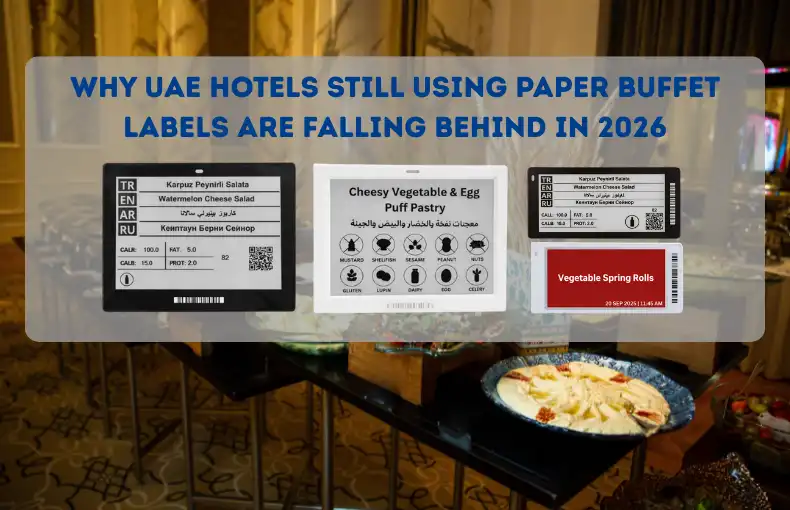
In the UAE hospitality industry, trends do not wait. Hotels that adopt operational technology early set the standard, while those that delay are quickly perceived as outdated. This is exactly what is happening today with buffet labeling.
By 2025, a growing number of UAE hotels had already transitioned from paper buffet labels to Digital Buffet Tags. In 2026, continuing to use printed cards is no longer a neutral choice—it is a signal that a hotel is behind current operational and guest-experience standards.
Digital buffet tags are not an experiment anymore. They are becoming the new baseline for modern buffet operations in the UAE.
Paper Buffet Labels: A Practice That No Longer Scales
Paper buffet labels were designed for a slower, simpler hospitality era. Today’s UAE hotel environment is neither.
Hotels still relying on paper labels face daily challenges:
- Labels become outdated when ingredients change
- Allergen details are missed or oversimplified
- Staff rush to reprint labels during peak service
- Visual inconsistency across buffet stations
- Increased risk of guest complaints and compliance issues
In high-volume buffets, paper labels break down under pressure. They depend entirely on manual discipline—and manual systems fail most often during busy service hours.
The Market Has Already Moved On
This is the uncomfortable truth for many operators:
the transition has already started.
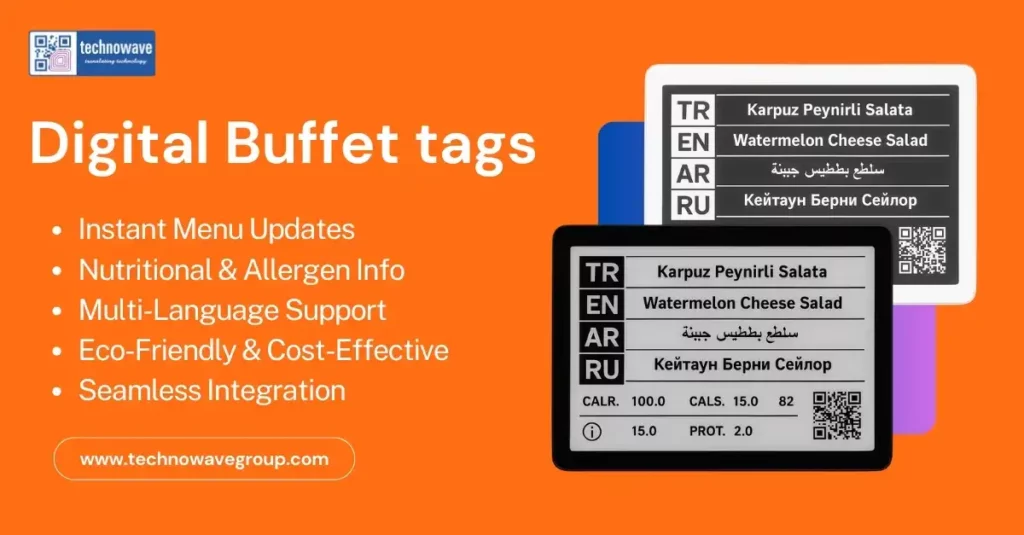
In 2025, leading UAE hotels began deploying digital buffet tags to:
- Standardize allergen disclosure
- Improve buffet presentation
- Reduce operational workload
- Align with international hospitality benchmarks
As a result, guest expectations are quietly shifting. When guests experience clean, digital, multilingual buffet displays in one hotel, they notice the absence of the same in another.
Paper labels now create a negative contrast—even if the food quality is excellent.
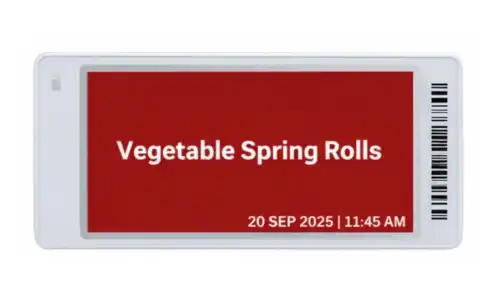
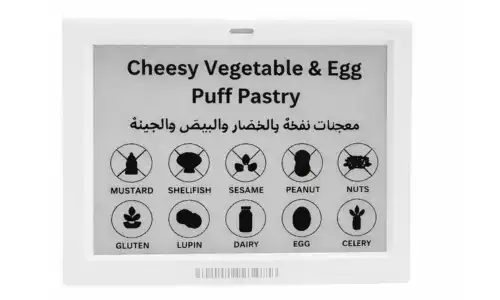
Digital Buffet Tags Are No Longer “Innovation” — They Are Infrastructure
In 2026, digital buffet tags should be viewed the same way hotels view:
- Property management systems
- Digital room access
- Online check-in
- Guest Wi-Fi
They are not marketing features. They are operational infrastructure.
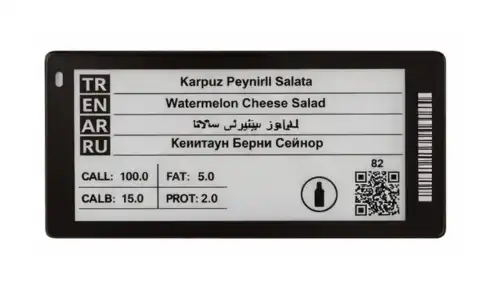
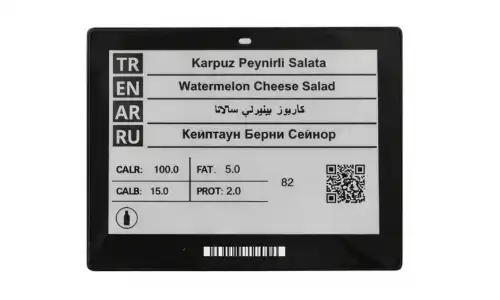
Digital buffet tags ensure that:
- Dish information is always accurate
- Allergen data is visible at the point of selection
- Updates happen instantly, not at the next print cycle
- Presentation remains consistent across outlets and shifts
Hotels that delay adoption are not saving cost—they are accumulating operational risk.
Paper buffet labels are already outdated
Leading UAE hotels began adopting digital buffet tags in 2025. In 2026, staying on paper means falling behind guest expectations, compliance standards, and operational efficiency.
Compliance Risk Is Higher with Paper Than Most Hotels Realize
Buffet operations are one of the highest-risk areas for allergen-related incidents. The risk is not malicious—it is procedural.
Paper labels fail when:
- A supplier changes
- A recipe is adjusted mid-service
- A label is reused incorrectly
- A busy staff member forgets to replace it
Digital buffet tags remove this dependency on manual memory. When data is centralized and controlled, accuracy becomes a system outcome—not a human gamble.
Hotels that continue with paper labeling are relying on outdated processes in a regulatory environment that is becoming more precise, not more forgiving.
Guest Perception: Silent but Powerful
Guests rarely complain about paper labels. They simply notice.
They notice when:
- Allergens are unclear
- Dish names are inconsistent
- Labels look worn or improvised
- Information is only in one language
Digital buffet tags send a quiet but powerful signal:
“This hotel is organized, modern, and transparent.”
Paper labels send the opposite—whether intended or not.
Operational Reality: Your Staff Already Has Better Things to Do
Hotel F&B teams are under pressure:
- Staffing optimization
- Service quality
- Speed during peak hours
Manually managing buffet labels adds no value—but consumes time every single day.
Digital buffet tags eliminate:
- Daily printing routines
- Emergency label replacements
- Visual mismatches across stations
- Repetitive, low-value tasks
Hotels that adopted this in 2025 already see it as a non-negotiable efficiency gain, not a luxury.
The Real Question for 2026: Why Wait?
Hotels still using paper buffet labels in 2026 should ask themselves one question:
Are we choosing to lead, or choosing to follow later—at a higher cost?
Waiting does not mean standing still. It means:
- Falling behind guest expectations
- Increasing compliance exposure
- Losing operational efficiency
- Appearing outdated compared to competitors
Aggressive adoption is not about being flashy—it is about staying relevant.
Why Technowave Is the Right Partner to Make the Shift Now
The biggest mistake hotels make is viewing digital buffet tags as a device purchase. This is not a gadget—it is an operational system.
Technowave approaches digital buffet tags as a complete hospitality solution, not just hardware.
- Designed specifically for buffet and F&B environments
- Tailored layouts for real hotel operations
- Professional installation and placement planning
- Structured content workflows for chefs and managers
- Local UAE support with long-term scalability
This ensures hotels transition smoothly—from paper dependency to digital control—without operational disruption.
Final Message to UAE Hotel Decision-Makers
By 2026, paper buffet labels are a sign of delay, not tradition.
The market has already moved. Guests have already noticed. Leading hotels have already adopted digital buffet tags.
The only question now is whether your property will:
- Catch up later, or
- Act decisively and lead now
Digital buffet tags are no longer about innovation.
They are about staying competitive in the UAE hospitality landscape.
Ready to replace paper buffet labels in 2026?
UAE hotels are already moving to digital buffet tags for faster updates, clearer allergen visibility, and a premium buffet presentation. Don’t wait to catch up—lead now.