
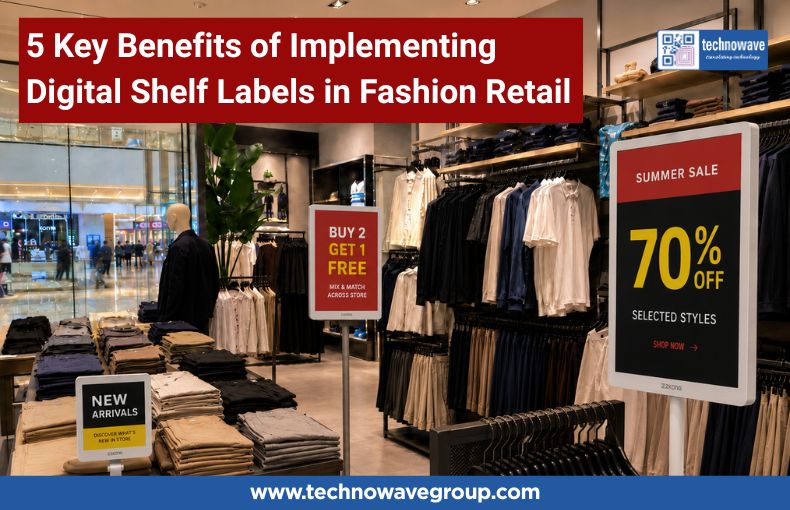
Digital shelf labels fashion retail solutions transform how apparel businesses display prices, promotions, and product information. Unlike traditional paper tags, digital shelf labels (DSL) enable fashion retailers to instantly update pricing, promotions such as “Buy 1 Get 1” or “50% Off,” and product details electronically, enhancing accuracy and customer engagement. This technology aligns with the dynamic promotional strategies typical in fashion stores, where visual appeal and timely price communication are critical to sales performance.
Introduction to Digital Shelf Labels in Fashion Retail
Digital shelf labels (DSL) are electronic displays typically installed on store shelves, replacing paper price tags with digital screens that communicate pricing, promotions, and product details. In fashion retail, these labels are designed to accommodate the unique needs of apparel stores where promotional messaging and brand aesthetics play a vital role in influencing buying decisions. Compared to grocery and supermarket ESLs, fashion retail DSLs emphasize high-resolution graphics and the ability to showcase promotional offers prominently above or beside products.
The core technology leverages wireless communication protocols such as Zigbee, Bluetooth, or Wi-Fi to sync with a central pricing management system. This enables fashion retailers to manage pricing and promotional content centrally, ensuring consistency across multiple store locations. For fast-moving fashion retail environments, this means reducing manual labor associated with price changes and minimizing pricing errors that can erode customer trust.
Fashion retailers benefit from DSL’s ability to display dynamic promotions visually, including flash sales, seasonal discounts, and bundle offers, which are typically not feasible with static paper tags. This capability supports agile marketing strategies and enhances in-store shopper engagement by making promotional offers more visible and attractive.
In GCC markets, where retail competition is fierce and customer expectations for seamless shopping experiences are high, adopting digital price tags fashion retailers can differentiate their stores through technology-driven innovation, improving operational efficiency and customer satisfaction.
Enhancing Pricing Accuracy
Pricing accuracy is fundamental in fashion retail, where frequent promotional changes and markdowns are commonplace. Digital shelf labels eliminate manual price updates, which are prone to human error, ensuring that the price displayed matches the point-of-sale system and reduces discrepancies during checkout.
Unlike paper tags that require labor-intensive replacement, DSLs update prices automatically from the store’s central pricing database. This synchronization prevents costly mismatches that can result in customer dissatisfaction or lost revenue due to incorrect discounts or pricing.
In fashion retail, promotions such as “Buy 1 Get 1 Free,” “50% Off Selected Items,” or tiered discounts are often displayed graphically on DSLs, making them clearer to customers and reducing confusion. This clarity enhances the retailer’s ability to execute complex pricing strategies without risking errors.
Moreover, digital shelf labels support multi-currency and multilingual displays, which are essential in GCC retail environments serving diverse customer demographics. This ensures pricing information is accessible and accurate for all shoppers, improving the overall transparency and trustworthiness of the retail experience.
Streamlining Operational Efficiency
Fashion retail stores often experience high labor costs associated with updating price tags during promotional campaigns or seasonal changes. Digital shelf labels drastically reduce this manual workload by enabling centralized control over pricing and promotional content.
By automating price updates, store staff can be redeployed to customer service or merchandising tasks, improving store productivity. This operational shift is especially beneficial during peak sales periods such as Ramadan or Dubai Shopping Festival, where rapid price changes are common.
DSLs also reduce errors and the need for price correction at checkout, which can cause delays and damage the store’s reputation. This operational reliability translates into smoother store operations and improved customer satisfaction.
Integration with existing retail automation systems, such as POS or ERP platforms, allows fashion retailers to synchronize pricing data seamlessly. This connectivity ensures that inventory tracking systems and sales data reflect accurate pricing, facilitating better stock management and sales analytics.
Comparison of Manual vs Digital Shelf Label Price Updates
| Aspect | Manual Paper Tags | Digital Shelf Labels |
|---|---|---|
| Update Speed | Hours to days | Seconds to minutes |
| Labor Intensity | High manual effort | Minimal staff involvement |
| Error Rate | High risk of mismatch | Automated accuracy |
| Promotional Flexibility | Limited to printed signs | Dynamic graphic messaging |
| Cost Over Time | Recurring printing and labor | Higher initial investment, lower operational cost |
Real-Time Updates and Flexibility
Fashion retail demands agility in pricing and promotions to respond to market trends and customer demand swiftly. Digital shelf labels enable real-time updates across the entire store or multiple locations, allowing retailers to adjust prices or launch promotions instantly.
This flexibility supports flash sales, clearance events, and time-limited offers that drive foot traffic and increase conversion rates. Retailers can remotely schedule price changes or promotional content, reducing the risk of outdated pricing on shelves.
Moreover, digital price tags fashion retail can display multimedia content such as product images, QR codes for online ordering or detailed product info, and even video clips in advanced ESL models. This enriches the shopping experience and bridges the gap between physical and digital retail.
In GCC markets, where consumers are tech-savvy and expect omnichannel experiences, the ability to update shelf information in real time without physical intervention is a significant competitive advantage.
Improving Customer Experience
Digital shelf labels enhance the customer journey by providing clear, consistent, and visually appealing pricing and promotional information. Fashion shoppers benefit from easy-to-read tags that highlight offers such as “Buy 1 Get 1 Free” or “50% Off” with vibrant graphics, improving decision-making on the sales floor.
DSLs reduce customer frustration caused by mismatched prices between shelf tags and checkout scanners, a common issue in busy retail environments. This reliability builds trust and encourages repeat visits.
Additionally, ESLs can integrate with people counting and footfall analytics solutions to optimize promotional placement based on shopper behavior insights. Retailers can tailor promotional campaigns dynamically, improving engagement and sales effectiveness.
Digital labels also support accessibility features such as larger fonts or contrast adjustments, making stores more inclusive for shoppers with visual impairments, which is increasingly important in GCC retail regulations.
Environmental and Cost Benefits
While the initial investment in digital shelf labels is higher than traditional paper tags, the long-term cost savings and environmental benefits are substantial. DSLs eliminate the need for continual printing of paper tags, reducing paper waste and associated printing costs.
Fashion retail involves frequent seasonal changes and promotions, which means traditional paper tags create significant waste. By switching to digital labels, retailers contribute to sustainability goals and reduce their carbon footprint.
Over time, the reduction in labor costs for price updates and the minimization of pricing errors translate into operational cost efficiency. This is particularly relevant for multi-location fashion chains in the GCC, where consistent pricing and branding are crucial.
Moreover, the durability of electronic labels reduces the frequency of replacements compared to paper tags, which wear out or get damaged through handling.
Challenges and Considerations
Implementing digital shelf labels in fashion retail requires careful consideration of hardware compatibility, wireless connectivity, and integration with existing retail management systems. Retailers must assess their IT infrastructure readiness to support real-time data synchronization across multiple stores.
The choice of ESL technology (e.g., wireless protocol, display type) should align with the store layout and promotional strategies. For fashion retail, high-resolution displays capable of showing clear promotional graphics are essential.
Cost considerations must balance initial investment with long-term benefits. Retailers should evaluate ROI based on labor savings, error reduction, and marketing impact rather than just upfront hardware costs.
Finally, training store staff and marketing teams to manage and utilize the digital shelf label system effectively is crucial to maximizing its benefits. Partnering with experienced providers ensures smoother implementation and ongoing technical support.
Conclusion: The Future of Fashion Retail with ESL
Digital shelf labels are revolutionizing fashion retail by enabling precise pricing, dynamic promotions, and enhanced customer engagement. Their ability to support complex promotional formats like “Buy 1 Get 1” or “50% Off” with eye-catching visuals differentiates fashion retailers in today’s competitive GCC market.
By streamlining operations, reducing errors, and improving shopper experience, ESL technology represents a strategic investment for fashion retailers aiming to modernize in-store marketing and pricing accuracy.
For fashion retail businesses considering this transition, partnering with an expert provider that offers end-to-end ESL solutions—including hardware, software integration, installation, and local support—is essential. This approach ensures rapid deployment and continuous system reliability.
Technowave International’s extensive experience in retail automation and Electronic Shelf Labels positions it as a trusted partner for GCC fashion retailers seeking to leverage digital shelf labels for operational excellence and enhanced customer experience.
Related Articles
- Electronic Shelf Labels vs Paper Price Tags: What Indian Retailers Are Losing Every Day
- The Digital Transformation of Retail in the UAE, Saudi Arabia, and Oman
5 Key Benefits of Digital Shelf Labels in Fashion Retail
Explore 5 key benefits of digital shelf labels in fashion retail, boosting pricing accuracy, customer experience, and operational efficiency.