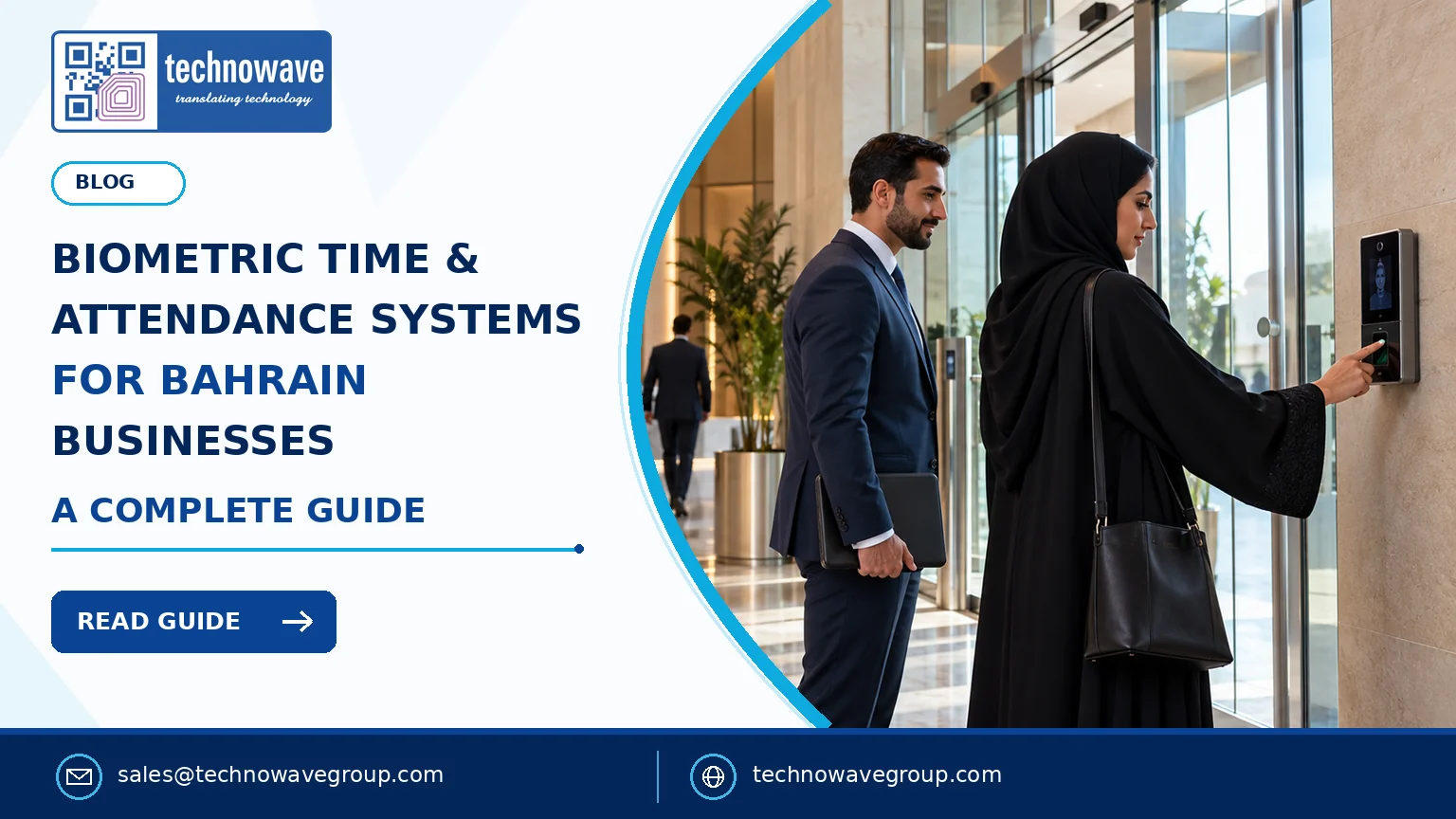
If you are evaluating biometric time attendance Bahrain solutions, the right system should do more than record clock-ins. It should verify identity accurately, apply shift rules correctly, integrate with payroll or HR software, and remain reliable across Bahrain offices, retail stores, warehouses, healthcare sites, and industrial facilities. Buyers in Bahrain typically succeed when they treat time attendance as an operational control system, not just a wall-mounted device purchase.
What is a biometric time attendance system? It is a workforce attendance platform that uses a biometric identifier such as fingerprint, face, or palm pattern to confirm that the correct employee is checking in or out. The terminal captures the attendance event, stores or transmits it to software, and applies attendance logic such as shifts, late arrival, overtime, grace periods, holidays, and approvals.
Why biometric time attendance matters for Bahrain operations
Manual registers, PIN codes, and unmanaged swipe cards create avoidable problems: buddy punching, disputed overtime, incomplete shift records, and payroll correction work at month-end. In Bahrain, these issues become more visible in businesses with rotating shifts, contract staff, multiple branches, or mixed front-office and field teams. A biometric system introduces identity certainty at the point of attendance capture.
The strongest use cases are practical rather than theoretical. Retail chains need staff arrival visibility before opening. Warehouses need clean in-out records for shift handover. Hotels and restaurants need attendance control across departments with different shift templates. Clinics, schools, and corporate offices need traceable logs for HR, audit, and facility control. In each case, the value comes from reducing exceptions and making attendance data usable, not merely collected.
Buyers often ask, is biometric attendance only for large enterprises? No. Small and mid-sized Bahrain businesses also benefit when attendance disputes consume manager time or when payroll depends on manually consolidated spreadsheets. A single-site office may only need one terminal and basic attendance software, while a distributed operation may need central dashboards, remote device health monitoring, and policy-based reporting.
For readers comparing attendance with wider workforce and security workflows, it helps to review a broader biometric time attendance system overview and see how it connects with adjacent controls such as asset management system processes in organisations that want stronger audit discipline.
Core system types, features, and selection criteria
The first decision is the biometric mode. Fingerprint remains common where gloves, masks, or frequent environmental dust are not major barriers and where users can present fingers consistently. Facial recognition is usually preferred in premium offices, healthcare, education, and customer-facing environments because it is faster for users, touchless, and easier for high-throughput entrances. Some buyers choose hybrid devices to support face plus fingerprint for operational flexibility.
Key hardware specifications matter more than many buyers expect. Check template capacity, transaction log capacity, authentication speed, false acceptance controls, camera quality for face recognition, infrared support for low light, ingress protection if installed in semi-exposed areas, relay support for door access integration, and network options including TCP/IP, Wi-Fi, 4G, or USB fallback. A device that looks suitable on paper may fail if branch connectivity is unstable or if user enrollment volume is underestimated.
What should buyers check before choosing a system?
Buyers in Bahrain should verify six items before requesting quotes:
- User volume: total employees, concurrent peak usage, and expected growth.
- Attendance rules: shifts, overnight schedules, split shifts, Ramadan timing changes, overtime logic, and grace rules.
- Site conditions: indoor or outdoor placement, humidity, dust, lighting, and power backup needs.
- Software scope: attendance only, or attendance plus leave, approvals, rostering, and payroll export.
- Integration needs: HRMS, payroll, ERP, access control, and branch-level reporting.
- Support model: installation, training, preventive maintenance, spare parts, and response times.
As a benchmark, product-class devices such as the Essl Aiface Magnum Biometric System are evaluated not just by recognition mode, but by deployment fit: lobby throughput, software compatibility, and lifecycle support.
Security, privacy, and compliance considerations in Bahrain
Biometric attendance data is sensitive because it ties identity to employment records and movement logs. That means buyers should ask not only how the device authenticates users, but also how biometric templates are stored, encrypted, transmitted, and backed up. A mature deployment uses template-based storage rather than raw image retention wherever possible, role-based access to software, strong password policy, and audit logs for administrative actions.
Another direct buyer question is, what security or compliance factors matter most? Three areas usually matter most: lawful and documented employee enrollment, secure handling of attendance records, and controlled system administration. Employers should define retention rules, who can access attendance exceptions, and how exports are shared with HR or payroll. If software is cloud-hosted or remotely managed, buyers should also ask where data resides and what backup and recovery controls apply.
Biometric attendance is often connected with door control. That can be efficient, but it changes the risk profile because a single endpoint now affects both attendance and physical access. In those cases, evaluate whether the system supports anti-passback logic, door relay management, emergency release requirements, and event segregation between HR reporting and access control logs. Businesses planning combined deployments should compare attendance with adjacent systems such as EAS RF systems and RFID detection systems so each control layer remains purpose-built.
For general privacy context, according to Bahrain’s Personal Data Protection Law overview, organisations handling personal data need a legitimate basis and appropriate safeguards. That does not replace legal advice, but it is a practical reminder that biometric attendance should be procured with HR, IT, and compliance input together.
Implementation timeline and operational planning
A successful biometric time attendance implementation in Bahrain usually starts with process mapping, not hardware installation. The project team should document employee categories, attendance policies, approval paths, location hierarchy, exception handling, and payroll cut-off dates. This prevents the common problem of installing devices quickly and then spending weeks reworking shift rules and report formats.
How long does implementation usually take? For a single site with standard attendance rules, deployment can be relatively straightforward once user data, holidays, and shift policies are prepared. Multi-site rollouts take longer because they involve network readiness checks, enrollment planning, software workflow testing, and often branch-by-branch training. The duration depends less on the device itself and more on policy complexity, integration depth, and data readiness.
Recommended rollout sequence
- Confirm business rules, attendance policy, and payroll mapping.
- Survey locations for mounting position, power, network, and user flow.
- Install software, configure users, departments, shifts, and holidays.
- Enroll a pilot group and test real scenarios such as late arrival, missed punch, overtime, and overnight shifts.
- Run parallel validation before payroll cutover.
- Train HR, supervisors, and first-line administrators.
Buyers should also plan for operational ownership after go-live. Who approves attendance corrections? Who monitors offline devices? Who replaces a terminal if it fails? Who updates holidays or temporary shift schedules? Organisations that formalise these responsibilities early get cleaner data and fewer payroll escalations. For local implementation confidence, many Bahrain buyers review practical deployment references such as the University of Bahrain case study and broader guidance in the Asset Management: A Complete Guide for Modern Businesses resource because both show how process discipline affects system value.
Pricing, ROI, and common buying mistakes
Biometric time attendance pricing Bahrain depends on four layers: terminal hardware, software licensing, installation and configuration, and ongoing support. A quote for one device with basic attendance software is not comparable to a quote that includes multi-branch dashboards, leave workflows, mobile approvals, payroll integration, spare unit strategy, and annual maintenance. Buyers should compare scope line by line, not vendor totals only.
The clearest way to budget is to separate capital and operating costs. Capital items usually include devices, mounting accessories, network or power add-ons, software setup, and initial enrollment support. Operating items usually include support renewals, software updates where applicable, database maintenance, policy changes, and on-site service if a terminal fails. For some buyers, the lower-risk choice is not the cheapest initial quote but the proposal with clearer lifecycle support and fewer hidden service dependencies.
| Cost Area | What to Check | Why It Changes Budget |
|---|---|---|
| Hardware | Face or fingerprint, indoor/outdoor rating, user capacity | Impacts durability, throughput, and replacement risk |
| Software | Attendance only vs HR workflow and payroll export | Expands functionality and admin efficiency |
| Integration | HRMS, ERP, access control, branch consolidation | Adds configuration and testing effort |
| Installation | Cabling, brackets, power backup, network readiness | Site conditions can materially change labor scope |
| Support | AMC, SLA, remote help, spare parts availability | Determines long-term reliability and downtime cost |
How can businesses compare biometric time attendance providers? Ask each provider to demonstrate exception handling, not just clock-in screens. Request sample reports, payroll export format, admin audit logs, and device health monitoring workflow. Also ask what happens when connectivity drops, when an employee misses a punch, or when a branch needs urgent replacement hardware. In the closing stage, buyers in Bahrain often shortlist vendors based on local service capability, not only brand labels.
The most common mistakes are predictable: buying on device price alone, skipping a policy workshop, underestimating enrollment effort, ignoring branch connectivity, and failing to assign system ownership after go-live. Businesses that avoid those mistakes usually reach value faster because the system is configured around real attendance rules instead of generic defaults. When the next step is vendor evaluation, Bahrain organisations can work with Technowave International for consultation, implementation planning, and after-sales support backed by regional experience in attendance, security, and automation projects. Contact the team to review your site requirements, compare device options, or plan a phased rollout.
FAQ: Biometric Time Attendance for Bahrain
Q: What should buyers check before choosing biometric time attendance in Bahrain?
A: Start with employee count, branch count, shift complexity, payroll rules, and whether you need attendance only or attendance plus access control integration. Also verify local support availability, device suitability for the environment, and how attendance exceptions are handled in software.
Q: How can businesses compare biometric time attendance providers?
A: Compare scope, not just price. Review hardware specifications, software workflows, integration ability, implementation method, support response, spare parts access, and whether the provider can demonstrate real attendance reports, exception handling, and administrator audit controls.
Q: What does biometric time attendance typically cost in Bahrain?
A: Costs vary based on device type, number of locations, software features, integration, and support coverage. A basic single-site setup is very different from a multi-branch rollout with face recognition, central dashboards, payroll export, and annual maintenance included.
Q: How long does biometric time attendance implementation usually take?
A: A simple installation can be completed quickly once policies and employee data are ready. However, multi-site or integrated projects take longer because they require surveys, software setup, enrollment, testing, training, and validation against live attendance and payroll scenarios.
Q: What security or compliance factors matter for biometric attendance?
A: Buyers should review employee consent or notice practices, access rights, retention rules, encrypted template handling, admin logs, backup procedures, and whether attendance data is segregated properly from other security systems. Compliance review should involve HR, IT, and management stakeholders.
Q: Is face recognition better than fingerprint for Bahrain businesses?
A: It depends on the environment and workflow. Face recognition is often preferred for touchless entry and faster user flow, while fingerprint may still be effective in controlled indoor spaces. The correct choice depends on throughput, hygiene expectations, and operating conditions.
Related Articles
- Asset Management: A Complete Guide for Modern Businesses
- CCTV Camera Installation & Surveillance Systems for Businesses in Oman
- How RFID Inventory Management Systems Transform Businesses in India
- CCTV & Surveillance Systems in Oman – Complete Security Guide for 2026
- Why Sensormatic EAS Systems Are the Best Choice for Retail Security in Bahrain
- Smart Retail Technology ROI Calculator: What Indian Businesses Can Expect from RFID, ESL & Analytics Investment
Biometric Time Attendance Bahrain Guide
Learn how to choose, deploy, and budget biometric time attendance Bahrain systems for offices, retail, warehouses, and multi-site businesses.