
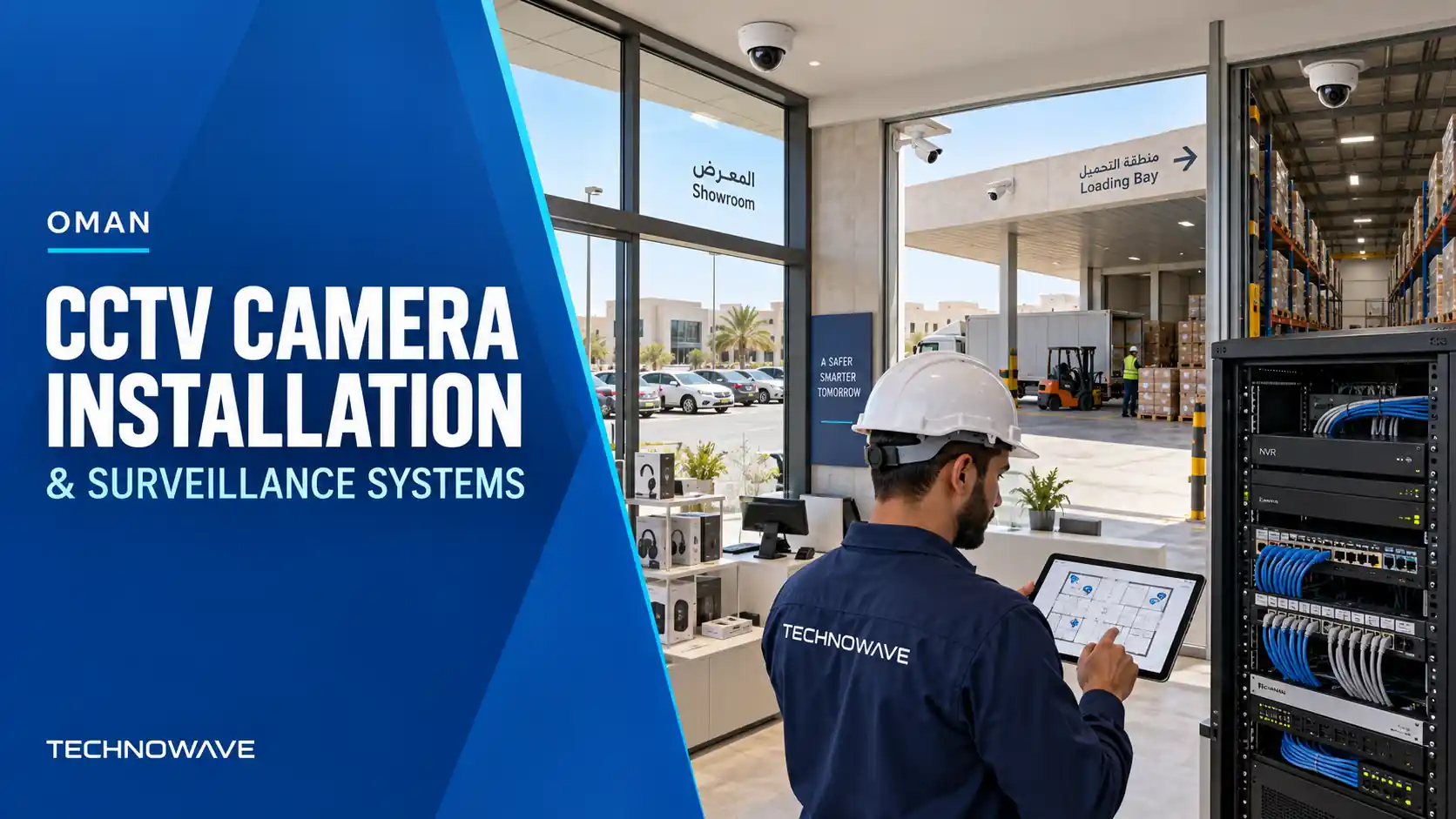
If you are evaluating cctv installation Oman for a retail store, warehouse, hotel, office, school, or industrial site, the right approach is to start with risk coverage, recording quality, retention needs, and local support capacity—not just camera count. In Oman, buyers typically succeed when they treat CCTV as part of a wider operational and security workflow that includes access control, incident review, AMC planning, and network readiness.
What is a business CCTV system? A business CCTV system is a video surveillance setup made up of cameras, recording hardware or VMS software, storage, structured cabling, network switches, power backup, user permissions, and viewing endpoints. For Oman buyers, the real purchase decision is not “which camera is cheapest,” but “which design captures usable evidence, integrates with operations, and remains supportable over time.”
This guide focuses on procurement and implementation choices specific to Oman businesses, especially those comparing ELV vendors, planning phased rollouts, or evaluating AMC support. For buyers who want a broader product overview, Technowave’s CCTV system solutions, regional Oman support presence, and practical articles in the knowledge base provide useful next-step references.
Why Oman businesses buy CCTV today: operational control, not just theft prevention
For most Oman buyers, surveillance projects are now approved for operational visibility as much as for loss prevention. Retailers want cashier lane review, entrance monitoring, after-hours verification, and integration with anti-theft controls. Warehouses need dock door evidence, pallet movement visibility, dispatch verification, and yard coverage where barcode or RFID processes may already exist.
Hotels, clinics, schools, and corporate offices usually evaluate CCTV differently. Their concern is controlled access to public-facing areas, staff-only zones, reception, corridors, parking, and service entrances while avoiding unnecessary surveillance in sensitive spaces. This is why camera placement strategy matters more than headline megapixel claims.
Which business areas usually need coverage first? In Oman projects, first-priority zones are normally entry and exit points, POS areas, receiving bays, cash offices, perimeter gates, parking areas, and inventory rooms. These locations produce the highest review value because incidents tend to involve movement of people, stock, cash, or vehicles rather than random activity in low-risk corridors.
A second driver is remote management. Multi-branch operators in Muscat and other cities increasingly want central viewing, health monitoring, and consistent retention policies across locations. CCTV becomes more valuable when tied to audit trails, visitor movement, and exception handling, especially in facilities that already use EAS RF systems or RFID detection systems to control shrinkage and movement.
How to select the right system architecture for your site in Oman
The first technical choice is usually IP-based surveillance versus older analog-style upgrades. For new business sites in Oman, IP cameras are typically preferred because they support higher resolutions, easier remote access control, analytics expansion, and cleaner integration with networks and VMS platforms. Analog HD may still suit limited retrofit budgets, but buyers should confirm future scalability before approving it.
How many megapixels do you really need? Not every area needs the same camera class. General overview zones may be covered with standard fixed dome or bullet cameras, while license plate capture, cashier detail, or distant perimeter monitoring may require tighter lens selection, stronger low-light performance, and correct scene-specific frame settings. A poor design with many cameras still fails if faces, transactions, or vehicle details are not actually identifiable.
Key selection criteria that matter more than brochure features
- Lighting conditions: bright storefront glass, warehouse aisles, and outdoor parking require different WDR and night performance.
- Lens and field of view: wrong lens choice creates blind spots or unusable zoom assumptions.
- Storage model: NVR, server-based VMS, or hybrid retention depending on branch count and review workflow.
- Power and network: PoE switching, UPS backup, rack layout, and bandwidth planning must be designed early.
- User governance: role-based access, export controls, event logs, and branch-level permissions are essential.
Buyers comparing vendors should request a marked camera layout, not just a bill of quantities. A serious cctv installation provider Oman should define scene objectives for each camera: overview, identification, transaction review, perimeter verification, queue monitoring, or vehicle capture. That document is often the difference between a system that records video and a system that delivers evidence.
| Business environment | Priority camera types | Main design objective | Common buyer mistake |
|---|---|---|---|
| Retail stores | Indoor dome, entrance camera, POS-focused view | Transaction review and shrinkage control | Covering aisles but missing cashier detail |
| Warehouses | Bullet cameras, loading dock views, yard coverage | Dispatch verification and movement evidence | Ignoring low-light dock areas |
| Hotels and offices | Dome cameras, reception, corridor, parking cameras | Visitor traceability and access support | Over-surveilling low-risk zones |
| Industrial sites | Outdoor bullet/PTZ, perimeter and gate cameras | Vehicle monitoring and site security | Using non-suitable housings for heat/dust |
Compliance, privacy, and cybersecurity questions Oman buyers should ask before approval
Security managers in Oman increasingly ask a better question than “Is the camera clear?” They ask, “Who can access footage, how is it stored, and how do we control misuse?” That shift is important because surveillance footage often contains staff movement, customer behavior, vehicle records, and operational activity that should be protected with the same discipline applied to other business systems.
What should buyers check before choosing CCTV installation in Oman? First, confirm where footage will be stored, who can export clips, how long retention is required internally, and whether remote access is protected by strong credentials and audit logs. Second, make sure the installer documents device passwords, IP schemes, firmware baselines, and handover procedures. A project without this documentation creates long-term support and security risk.
Cybersecurity matters because modern surveillance is networked infrastructure. Cameras, NVRs, VMS servers, mobile viewing apps, and remote maintenance paths all introduce attack surfaces. Good practice includes VLAN separation where appropriate, restricted internet exposure, firmware management, admin role separation, and disabling unused services rather than leaving default settings untouched.
Privacy and policy controls matter too. Staff should know which areas are monitored, managers should know who is authorized to review footage, and sensitive environments should be assessed carefully before camera placement. For multi-system environments, some Oman buyers also align CCTV with access control, attendance, and incident handling procedures so that video review supports a clear operational process rather than ad hoc monitoring.
Implementation planning in Oman: site survey, cabling, testing, and AMC readiness
The biggest implementation mistake is approving equipment before a proper site survey. In Oman, site conditions can vary sharply between malls, villas converted to offices, logistics yards, schools, and industrial compounds. Ceiling type, conduit routes, outdoor exposure, parking geometry, rack space, and internet policy all affect the installation design.
How long does cctv installation implementation usually take? A small office or shop may move quickly once approvals, drawings, and hardware are ready; a larger warehouse, hotel, or multi-branch rollout takes longer because civil work, network dependency, access windows, and test sign-off become more complex. Buyers should ask for a phased plan with survey, design approval, installation, configuration, user training, and acceptance testing treated as separate milestones.
What a professional implementation plan should include
- Detailed site survey with camera purpose by location.
- Cable route and switch-power planning.
- Storage sizing based on recording mode and retention target.
- Installation method statement and access schedule.
- Commissioning checklist for focus, angle, timestamp, export, and remote view.
- Handover pack with diagrams, credentials process, warranty, and AMC scope.
AMC is especially important for Oman buyers with multiple branches or environments exposed to dust and heat. “amc contracts in oman” is a practical search term because businesses quickly discover that surveillance performance drops when lenses, storage alerts, UPS batteries, fans, connectors, or firmware are ignored. A support contract should define preventive visits, fault response, spare part scope, health checks, and whether third-party devices can be covered under one service framework.
For buyers assessing supplier capability, implementation evidence matters. Technowave’s broader project portfolio, including regional deployments such as the Oman first ESL installation at MS MAX, shows why Oman customers often prefer vendors that can handle supply, on-site execution, integration, and after-sales support rather than acting only as box sellers.
CCTV installation pricing Oman: what really drives budget and ROI
What does cctv installation typically cost in Oman? Pricing depends less on the number of cameras alone and more on image objective, storage duration, civil work complexity, outdoor protection, networking, and support scope. A low-price quote may exclude structured cabling quality, UPS, rack accessories, VMS licenses, switch upgrades, configuration, documentation, or user training—items that later reappear as change requests.
For procurement teams, the best way to compare cctv installation pricing Oman is to normalize every quote against the same checklist. Ask each vendor to state camera model class, storage basis, retention assumption, mounting hardware, cable category, switch specification, warranty, AMC options, mobile access method, and commissioning deliverables. Without that alignment, the lowest quote is often not the lowest total cost.
How can businesses compare CCTV installation providers? Compare them on four dimensions: design quality, implementation capability, support structure, and documentation discipline. If one vendor offers clear scene-based design, training, and preventive maintenance while another offers only equipment pricing, they are not equivalent proposals.
ROI in business surveillance is usually operational and risk-based rather than purely numerical. Useful systems reduce investigation time, improve accountability, support dispute resolution, verify deliveries, strengthen after-hours checks, and help management review incidents without relying on verbal reports alone. For businesses looking for an end-to-end regional provider, Technowave International combines surveillance, security, and automation capabilities with local execution; buyers can review the company background and engage the team through the contact page for a site-specific recommendation in Oman.
FAQ
Q: What should buyers check before choosing CCTV installation in Oman?
A: Check camera coverage objectives, network readiness, storage retention needs, remote access controls, warranty terms, and AMC scope. Also ask for a documented site survey and layout drawing so you know exactly what each camera is expected to capture.
Q: How can businesses compare CCTV installation providers?
A: Compare providers by design detail, installation quality, after-sales support, documentation, and response capability in Oman. A serious supplier should explain camera purpose, storage design, user access controls, and commissioning steps rather than only sending a price list.
Q: What does CCTV installation typically cost in Oman?
A: Costs vary by camera type, resolution, storage period, indoor or outdoor conditions, cabling complexity, and software requirements. Buyers should compare total project scope, not camera count alone, because support items and infrastructure often change the real cost materially.
Q: How long does CCTV installation implementation usually take?
A: Small sites can be deployed relatively quickly once survey and approvals are complete, while warehouses, hotels, campuses, and multi-branch projects take longer due to civil work, network coordination, and phased testing. Always request a milestone-based rollout plan.
Q: What security or compliance factors matter for CCTV installation?
A: The most important factors are access control, password management, footage retention rules, export permissions, firmware updates, and proper documentation. Businesses should also define who may review footage and ensure camera placement respects operational sensitivity and internal policy requirements.
Q: Is AMC necessary for business surveillance systems in Oman?
A: Yes, especially for distributed sites or outdoor environments. Preventive maintenance helps maintain image quality, recording continuity, hardware health, and faster fault recovery. AMC is often the difference between a working system on paper and a dependable system during a real incident.
If you are planning a new surveillance project, upgrading an existing site, or comparing ELV vendors for cctv installation Oman, the next step is a proper site survey and scope review. Technowave International can support Oman businesses with consultation, installation planning, AMC strategy, and integrated security deployment—contact the team via WhatsApp or email to discuss your site requirements.
Related Articles
- CCTV & Surveillance Systems in Oman – Complete Security Guide for 2026
- How RFID Inventory Management Systems Transform Businesses in India
- Can Electronic Shelf Labels Work Without Internet? Understanding Esl System Architecture Vs Traditional Methods: Which Is Better for Businesses in GCC?
- RFID Asset Management System for Businesses: Features and Benefits
- Asset Tracking System: How It Works and Why Businesses Need It
- Asset Management: A Complete Guide for Modern Businesses
CCTV Installation Oman for Business Buyers
Learn how to plan cctv installation Oman projects, compare systems, manage compliance, and budget for business surveillance.